From Personal AI to Company AI: What Boards and CEOs Should Ask Next
Personal productivity from AI is real. It rarely reaches the team, and it almost never reaches the organisation. The reason is context.
Most companies have now rolled out AI assistants. People write faster, summarise faster and search faster. Personal productivity is real, and it shows up in every survey. Yet when boards ask what AI has done for the company as a whole, the answer is usually thin. The gains stay with individuals. They rarely reach the team, and they almost never reach the organisation.
The reason is not the model. It is context.
AI is only as good as the context it is given
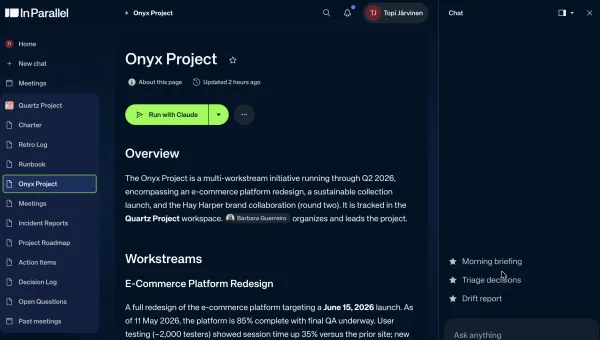
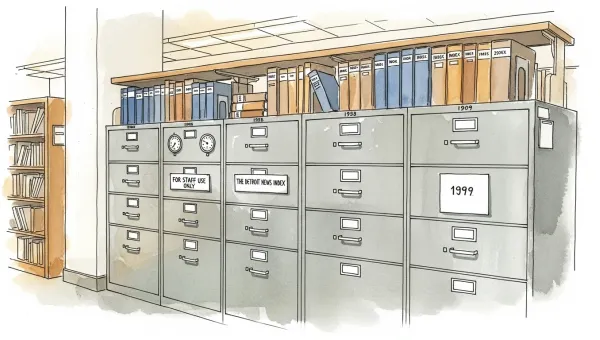
An AI tool can answer what it can see. What it cannot see is what actually runs a company: the decisions made in meetings, the reasons behind them, who owns what, and the priorities and urgencies that leadership shifts from week to week. That knowledge is unstructured and largely tacit. It lives in conversations, mail threads and people’s heads, not in any system the AI can read.
So people fill the gap by hand.
- 86% of managers use AI at work.
- 91% of them brief it by hand before it is useful.
- 4.4 hours a week is what they expect back if AI could read shared context.
Source: Coordination Tax Index 2026, In Parallel survey of 247 managers in five countries, June 2026.
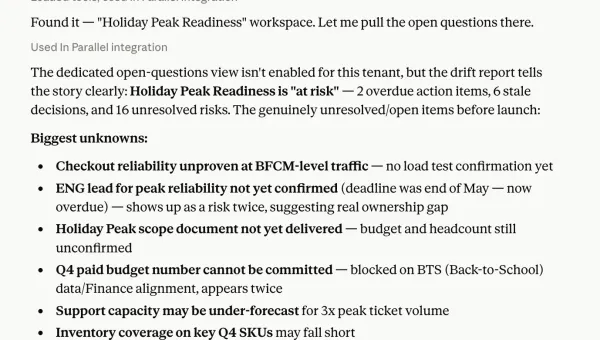
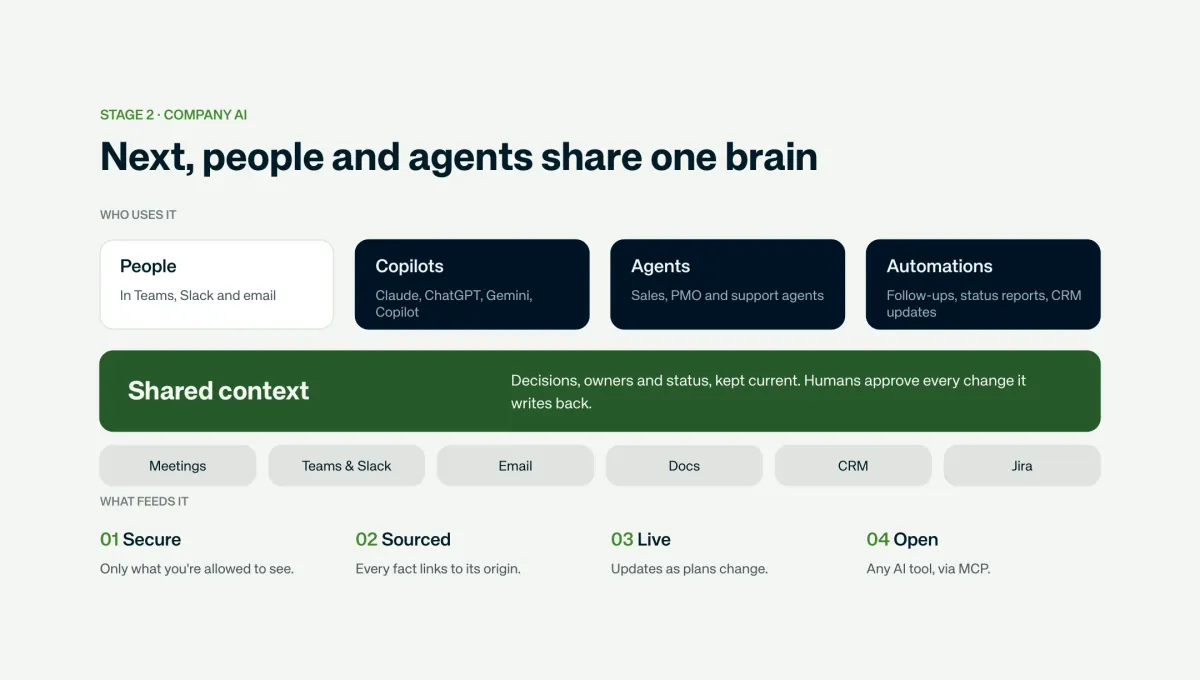
Today each assistant sees one person’s view: one person’s files, one person’s inbox, one person’s chat history. Three people on the same project run three copilots, each holding a different, partial picture of the same work. Most decisions never reach any of them. Open every file to AI instead, and sensitive details reach the wrong people. Plans change, but the AI keeps working from last month’s version. And an agent cannot pick up where a person, or another agent, left off.
Own and safeguard your context
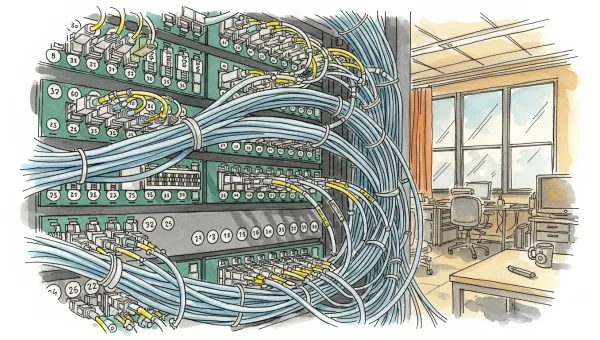
For a board, this is not only a productivity question. A company’s context is one of its most valuable assets: the record of what it has decided and why. Today that asset is scattered, unmanaged and, in places, quietly flowing into tools the company does not control.
The companies that move from personal to organisational productivity do three things.
They capture the context where it is created, in meetings, threads and mail, and turn it into decisions, commitments and risks with their sources.
They own it and safeguard it, with access rights per team, project and client, and with clear rules for sensitivity and retention.
They share it, governed, with the AI tools and agents they already use, so each tool sees exactly the context it should and nothing more.
How a shared context layer works
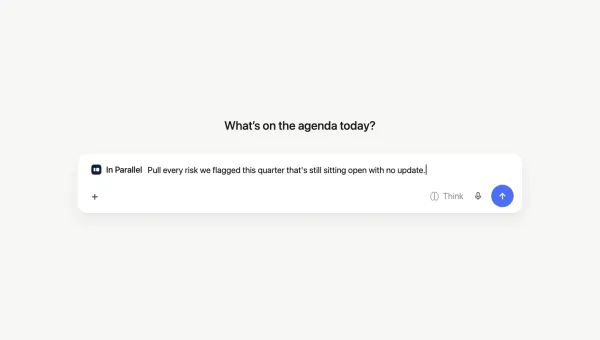
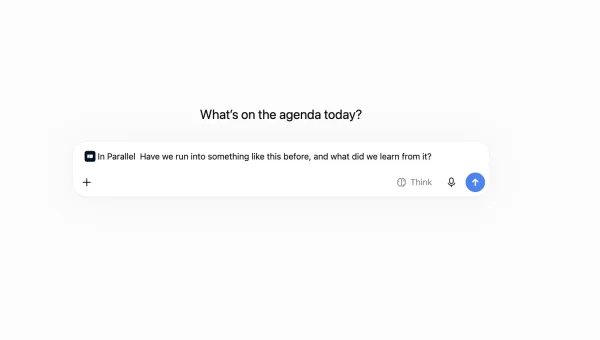
The hard part is not storage. It is making sense of the human discussions. A shared context layer extracts the decisions, opportunities and risks from the meetings, threads and mails where people actually work, and captures the unstructured data, tacit knowledge and dynamic context that matter most to an enterprise: priorities, urgent items, critical changes and delegations.
At In Parallel we do this with a probabilistic model, and then prune and preprocess the result with agents. It works on its own from the first day, and it gets richer as it is connected to the systems of record a company already has.
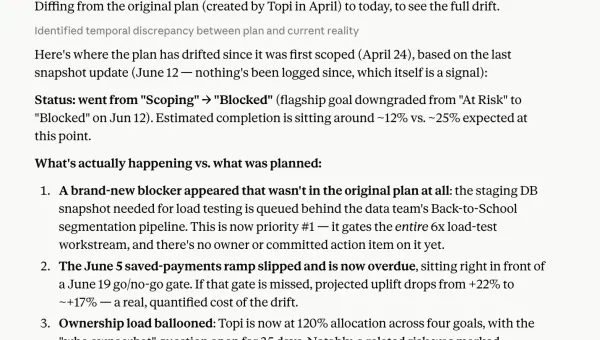
The test is the answer you get back. Ask what the steering committee decided about go-live, and a useful answer is not just “go-live moves to 5 December; data migration is the constraint.” It is that answer with its source: the steering committee minutes, and the date it was decided. A person can check it. An agent can act on it.
A mixed AI estate needs one governed layer
No company will run on a single AI tool. Teams use Copilot, Claude, ChatGPT and their own agents, and that mix will keep changing. The answer is not another assistant. It is a shared context layer underneath all of them: one governed source of what the company has decided, served to every tool over open standards such as MCP, so that the choice of AI tools and inference stays open.
That is what we build at In Parallel. Teams keep working in the tools they have; the context those tools see becomes the company’s own, current and controlled.
Questions for the next board meeting
- Where do our AI gains stop at the individual, and why?
- Who owns the company’s context today, and where does it live?
- Which AI tools can see our decisions, and under what access rules?
- If we changed AI vendors tomorrow, what would we lose?
- How would we know if our AI investment is lifting team and organisational productivity, not just personal output?
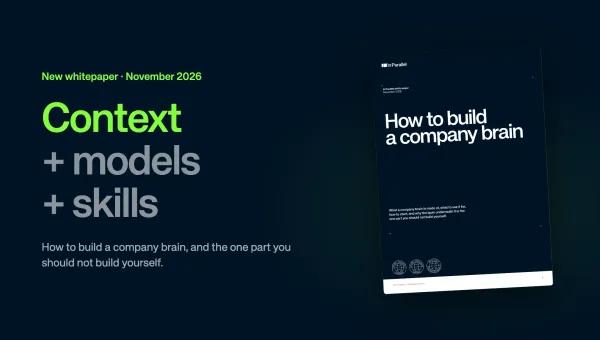
Our whitepaper, How to build a company brain, goes deeper into each step.
We are running a webinar series on the same topic, starting Wednesday 25 November: in-parallel.com/webinars.
Get insights like this in your inbox
One email per week on execution intelligence, team coordination, and enterprise AI. No fluff.
By subscribing you agree to our Privacy Policy. Unsubscribe anytime.