Why Calm Is a Management Skill (And How to Build It Into Your Week)
The hidden cost of constant switching
Research from Harvard Business Review and American Psychological Association shows that frequent task switching:
- Reduces focus and decision quality
- Increases stress and fatigue
- Slows down overall execution
In practical terms: Even if your team is busy all week, very little deep progress happens.
Why?
Because work is constantly being:
- interrupted
- reinterpreted
- manually updated across tools
Every meeting creates new information, but that information rarely flows cleanly into execution.
Why work feels chaotic (even when processes are good)
Most organizations already have:
- project plans
- tools like Jira or Asana
- reporting structures
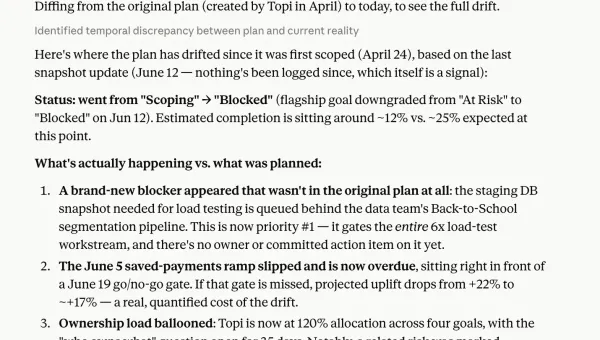
The issue isn’t structure. It’s that reality changes faster than the system updates.
After every meeting:
- decisions are made
- priorities shift
- risks appear
But:
- plans stay the same
- trackers stay outdated
- alignment drifts
So teams compensate by:
- adding more meetings
- writing more updates
- checking multiple tools
This creates noise, not clarity.
Calm isn’t less work, it’s clearer flow
Calm teams don’t necessarily work less, they work with less friction. You’ll recognize it when:
- everyone shares the same view of what’s happening
- decisions are visible immediately
- priorities don’t need constant re-explaining
- fewer “alignment” meetings are needed
Calm comes from one thing:
Work moves cleanly from signal → decision → action.
Without that flow, teams stay busy, but progress stays fragmented.
Where most teams get stuck
The biggest gap in modern work isn’t effort. It’s translation.
Between:
- what gets discussed in meetings
- and what gets reflected in execution systems
That gap creates:
- outdated plans
- duplicated work
- coordination overhead
In fact, managers can spend 30–40% of their time just maintaining alignment.
Not because they lack tools, but because their tools don’t talk to each other in real time.
Designing calm into your week
You don’t fix this by adding another process. You fix it by improving how work flows between moments. A simple shift:
1. Treat meetings as execution events
Not just discussions, but moments where reality changes.
2. Reduce manual translation
Avoid rewriting decisions into multiple tools.
3. Maintain one shared view of truth
So everyone sees the same plan, updated continuously.
How In Parallel builds calm into execution
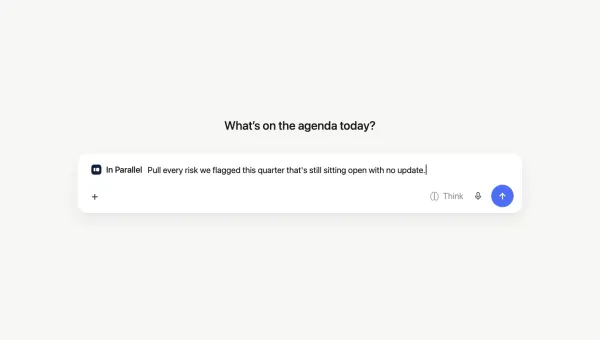
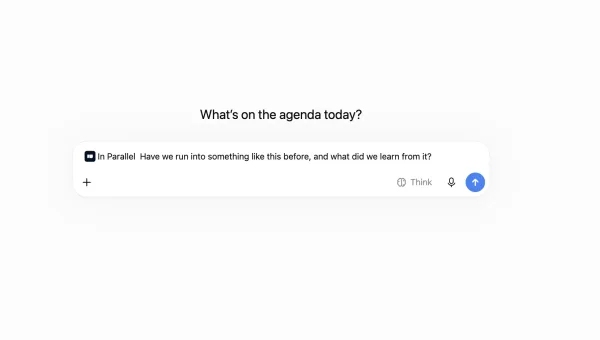
This is exactly the problem In Parallel is designed to solve.
Instead of:
- capturing notes
- and leaving teams to update everything manually
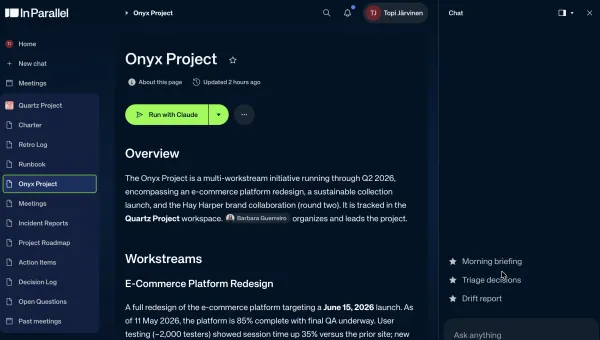
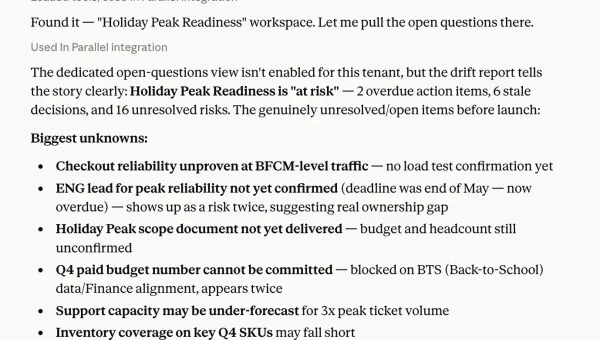
The Intelligent Management System:
- captures decisions from meetings
- links them to risks, dependencies, and plans
- updates your execution layer automatically
So instead of:
- chasing updates
- syncing tools
- running alignment meetings
Teams get:
- a living plan
- that reflects reality as it changes
See how this works in practice: https://www.in-parallel.com Explore team routines: https://www.in-parallel.com/routines Book a demo: https://www.in-parallel.com/demo
The real shift: from busy to effective
The goal isn’t to eliminate meetings or reduce activity.
It’s to make sure that:
- every conversation changes something real
- every decision moves work forward
- every team shares the same reality
Because in modern organizations:
Calm isn’t a personality trait. It’s a system outcome.
And the teams that build for it don’t just feel better, they execute better.
Get insights like this in your inbox
One email per week on execution intelligence, team coordination, and enterprise AI. No fluff.
By subscribing you agree to our Privacy Policy. Unsubscribe anytime.