Why Employee Onboarding Fails, And How to Actually Fix It

Here’s a number that should make anyone who runs teams uncomfortable: only 12% of employees say their company does onboarding well. Not 12% who rate it excellent, 12% who say it was done well at all.
The other 88% show up, sit through the laptop setup and the values deck and the tour of the office kitchen, and leave their first week still not knowing what’s actually going on. Who made which decisions last quarter. Why the roadmap looks the way it does. What changed three months ago that everyone else seems to understand as context and nobody thought to write down.
They’re not missing the org chart. They’re missing the history. And no employee onboarding programme in existence has ever successfully handed that over.
The Problem Everyone Misdiagnoses
The standard response to bad onboarding is more onboarding. A better induction pack. A buddy system. A structured 30-60-90 day plan. A welcome lunch with the leadership team.
These things are not bad. Some of them help. But they all share the same fundamental assumption: that the knowledge a new person needs in order to be effective exists somewhere, in a form that can be transferred.
It usually doesn’t.
What a new hire actually needs isn’t a document. It’s the answer to a set of questions that no document can reliably answer: what decisions shaped the current situation? Who owns what, and why? What was tried before and abandoned? What did the team decide last month, and what got deprioritised because of it? What is everyone implicitly assuming that nobody has said out loud?
This knowledge lives in the people who were in the rooms where it happened. It gets shared informally, in fragments, over weeks of corridor conversations and context dropped into Slack threads. Some of it never gets shared at all. The new hire pieces it together slowly, usually by making assumptions that turn out to be wrong, acting on them, and correcting course when someone explains the background they should have had on day one.
The fastest way to improve onboarding isn’t a better induction pack. It’s giving new employees access to what was actually decided, by whom, and why.
What the Data Actually Shows
The cost of getting the employee onboarding process wrong compounds quickly. Research from Gallup shows that only 29% of new hires feel fully prepared to do their job after onboarding. Nearly one in three people leaves within the first 90 days, often not because the role is wrong, but because the ramp-up was so disorienting that it never felt possible.
For senior hires, the stakes are higher still. A new VP or Director typically takes three to six months to reach full effectiveness. During that window, they’re making decisions with incomplete context, asking questions that slow down the people around them, and occasionally repeating history that the team has already lived through. The cost isn’t just their own productivity, it’s the productivity of everyone they interact with while they’re still figuring out what’s real.
Harvard Business Review research on executive transitions consistently points to the same root cause: new leaders inherit a picture of the organisation that is already out of date the moment they receive it. The strategy doc was written six months ago. The team structure changed last quarter. The priorities shifted after a customer conversation three weeks back that nobody captured formally. The new executive walks in with a map of somewhere that no longer quite exists.
Why This Is an Infrastructure Problem, Not an HR Problem
The framing of onboarding new employees as an HR challenge, a process to be designed, a programme to be delivered misses what’s actually broken.
The knowledge a new person needs isn’t failing to reach them because the induction programme is poorly designed. It’s failing to reach them because it was never captured in a durable, accessible form in the first place.
Every week, across every team in an organisation, decisions get made that change the shared reality of the work. A product direction shifts. A commitment is made to a partner. A risk gets acknowledged and consciously accepted. A priority gets deprioritised. These decisions live, fleetingly, in the meeting where they happened. Then they diffuse into memory, the collective, lossy, non-searchable memory of the people who were present.
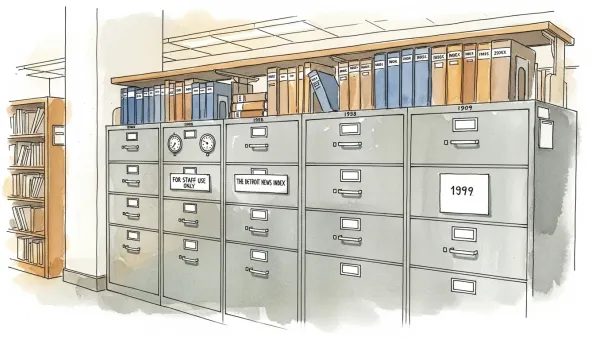
When a new person joins, there is no system they can query. There is no record that says: here is what was decided, here is why, here is what it means for the work you’re about to do. There are documents that tell a partial story, frozen at the moment they were last updated. There are people who can help fill in the gaps, when they have time. There is a lot of implicit knowledge that will take months to accumulate.
This is not a failure of HR diligence. It is a failure of execution infrastructure. The organisation was never designed to make its own history legible.
This is the same mechanism behind what we call the Coordination Tax, the hidden cost organisations pay when humans have to manually maintain shared understanding. Onboarding is where that cost hits hardest and most visibly.
What Changes When Decisions Are Captured Continuously
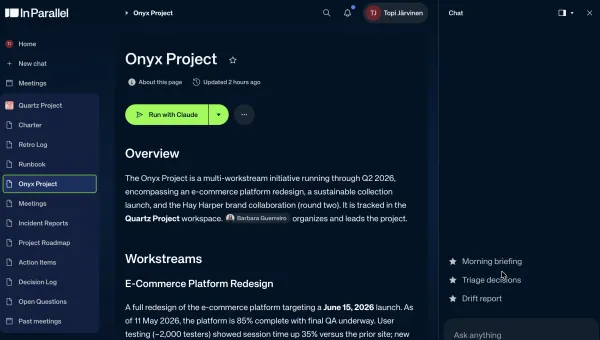
The employee onboarding problem looks different when an organisation runs on a Living Plan, a continuously updated record of what was decided, by whom, in which meeting, and what it meant for the work.
A new hire on their first day doesn’t need to spend six weeks piecing together context. They can read the decisions that shaped the current roadmap. They can see who owns what and why the ownership is structured that way. They can understand which direction was considered and set aside, and what reasoning led the team to the path they’re on. They walk into their first meetings with context that would previously have taken months to accumulate.
This isn’t a knowledge base. Knowledge bases go stale the moment someone forgets to update them, and someone always forgets. A Living Plan is different because it updates itself from the meetings where decisions actually happen. It doesn’t require a culture of diligent documentation. It requires only that meetings continue to happen, which they will regardless.
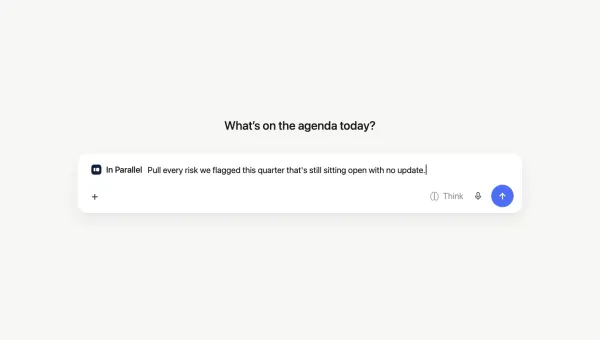
The mechanism is straightforward. An AI note-taker joins every meeting, extracts the structured outputs: decisions, commitments, risks, ownership changes and rolls them into the plan automatically. Nothing is lost between the moment a decision is made and the moment it becomes part of the organisation’s shared record. When a new person joins, that record is there. Not a slide deck someone assembled for their benefit. The actual history of how things got to be the way they are.
The Senior Hire Problem, Specifically
It’s worth pausing on the executive onboarding case, because the stakes are highest and the current solutions are weakest.
When a new VP of Product or Chief Operating Officer joins, the organisation typically does one of two things. It either runs a formal “listening tour” – a series of structured conversations with key stakeholders, which produces useful impressions but limited structural understanding, or it hands the new executive a pile of documents and trusts them to synthesise a picture from the fragments.
Neither approach solves the actual problem. The listening tour captures current opinions, not historical decisions. The document pack tells the story the organisation decided to write down, which is rarely the whole story.
What a new executive actually needs is the execution record: the last six months of decisions, the commitments that were made and kept and broken, the places where the plan diverged from reality and the team chose to update the plan rather than fix the reality. That record tells you more about an organisation’s actual operating culture than any amount of onboarding conversation.
When that record exists and is legible, the transition curve compresses. A new executive can get to first-principles questions, what should change, what is working, where are the structural problems, in weeks rather than months. The organisation gets a faster return on an expensive hire. The executive gets to do the work they were brought in to do instead of spending the first quarter decoding the past.
The Quiet Compounding Effect
There’s a version of this problem that never gets written about, because it’s too diffuse to point at: the onboarding tax on existing team members.
Every new hire, for months after joining, is a net consumer of other people’s context. They ask questions that interrupt the work. They need things explained that feel obvious to the people who were there. They make decisions that have to be undone when someone catches the missing background. They attend meetings where half the conversation is backstory they’re trying to follow in real time.
This is not a criticism of new hires, it is the inevitable consequence of joining a system that doesn’t maintain its own history in an accessible form. The knowledge exists. The infrastructure to share it doesn’t.
The coordination tax, in this framing, is not just the cost borne by the new person. It’s the cost distributed across everyone who has to act as a manual knowledge transfer system while also trying to do their actual job. In organisations with poor program visibility, that cost is especially high, new hires and veterans alike are working from an incomplete picture.
A Different Starting Point
The question most organisations ask about onboarding is: how do we make the induction programme better?
The question worth asking instead is: does the organisation maintain a record of itself that a new person could actually read?
Not a collection of documents. Not a wiki that hasn’t been updated in six months. A living, continuous record of the decisions that shaped the current situation, maintained automatically, from the meetings where those decisions were made.
That record doesn’t just improve the employee onboarding process. It solves the problem that makes onboarding hard: that organisations are largely illegible to themselves, and new people bear the cost of that illegibility most acutely, at the worst possible time.
Build the infrastructure. The onboarding gets easier as a side effect.
In Parallel captures every decision in your meetings and keeps your plans current — automatically. New team members get months of context in minutes. See how it works →
Related reading
Get insights like this in your inbox
One email per week on execution intelligence, team coordination, and enterprise AI. No fluff.
By subscribing you agree to our Privacy Policy. Unsubscribe anytime.