AI Makes Good Management More Important
What Harvard and Stanford research reveals about why human judgment still matters, and why it needs better systems to scale.

AI is quickly becoming part of everyday work. It writes, summarizes, suggests, and analyzes. But as the tools improve, many organizations are realizing something simple: technology alone doesn’t make work clearer. Research from Harvard and Stanford shows that AI creates the most value when it supports human judgment, not when it replaces it - and that requires better ways to connect decisions, ownership, and daily work.
AI makes good management more important
AI is suddenly everywhere at work. It writes drafts, summarizes meetings, analyzes data, and suggests what to do next. A lot of companies are rushing to adopt it.
But something interesting is happening along the way. Instead of making leadership easier, AI is making one thing clearer: how people make decisions and work together matters more than ever.
Two recent perspectives, one from Harvard, one from Stanford point to the same idea from different sides: AI is powerful, but without the right setup around it, it doesn’t actually make work better.
People don’t want AI to take over. They want it to help
Stanford looked at what workers actually want from AI. The answer is pretty practical:
People want AI to:
- handle repetitive tasks
- find information faster
- help them make better decisions
They don’t want:
- to lose control over their work
- to be told what to do by a black box
- or to clean up after tools they don’t understand
In short, people want support, not replacement. That already shows a problem many companies run into.
- If AI gives suggestions but no one owns the decision…
- If insights sit in one tool and the real work happens in another…
- If context stays in people’s heads…
AI doesn’t simplify work. It just adds another layer.
Technology isn’t the hard part
Technology isn’t the hard part
Harvard describes AI like climbing gear: useful, powerful and sometimes necessary. But not the guide.
The guide is still human:
- judgment
- common sense
- understanding people
- knowing what actually matters
- making trade-offs when things are messy
AI can suggest a direction. People still decide where to go. And as AI gets better, leaders spend less time checking tasks and more time figuring out how people and tools should work together. That’s not a tech problem, it’s an organization problem.
Where things usually break
Put these two views together and a pattern shows up.
AI increases:
- the amount of information
- the number of suggestions
- the speed of everything
But most organizations already struggle with:
- unclear priorities
- decisions that disappear after meetings
- teams pulling in different directions
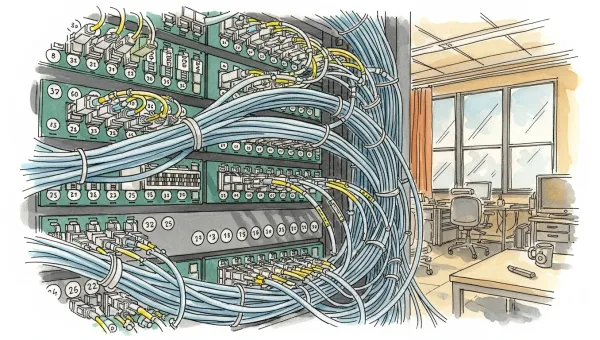
- too many tools that don’t connect
So AI lands in a messy setup.
Instead of clarity, teams get:
- more dashboards
- more alerts
- more tools
- more noise
The problem isn’t AI, it’s that work isn’t clearly connected.
Turning AI into something teams can use
This is exactly the problem we kept running into when talking to teams.
Not that they lacked the tools or know-how. But that important things kept slipping through the cracks:
- decisions made on Monday were forgotten by Thursday
- priorities looked different depending on who you asked
- meetings produced agreement, but not follow-through
- AI tools generated insights that no one quite knew how to use
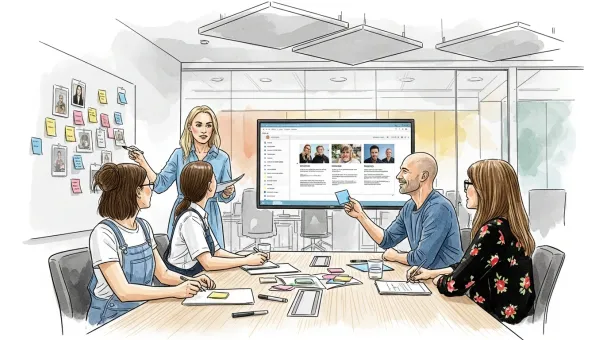
Work wasn’t failing because people were careless. It was failing because there was no shared place where decisions, ownership, and progress actually lived together.
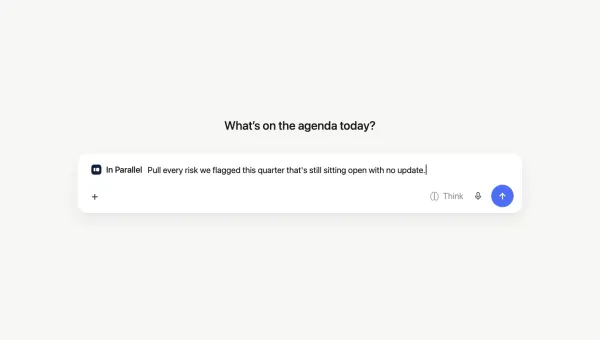
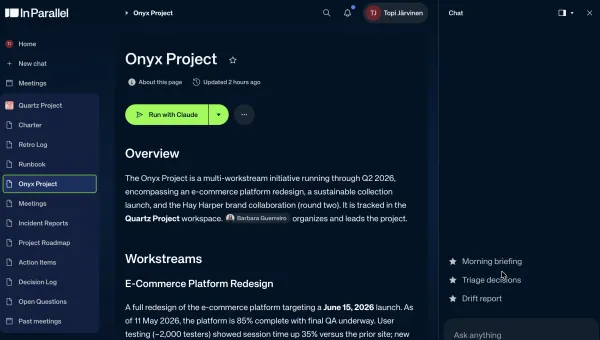
That’s why we started building our Intelligent Management System.
Not as “another tool” and not as a layer of reporting on top of work.
But as a simple idea:
One shared, living view of what the organization is trying to get done – and who is responsible for what, right now.
In practice, that means:
- decisions don’t disappear after meetings
- priorities are visible to everyone involved
- progress isn’t hidden in slide decks or Slack threads
- AI suggestions show up in context, next to real work and real owners
For us, IMS isn’t about controlling work. It’s about removing the constant low-grade stress of not quite knowing:
- Are we aligned?
- Did we actually decide this?
- Who owns the next step?
- Are we drifting off track?
When that clarity exists, AI becomes genuinely helpful. Without it, AI just adds more output to an already noisy system.
Human skills don’t scale on their own
Harvard talks a lot about human skills being more important in the AI age. That’s true. But skills alone don’t spread automatically.
Without a system:
- good judgment stays with individuals
- context gets lost
- responsibility becomes fuzzy
- teams repeat the same conversations
A system like IMS helps turn those human skills into something the whole organization can use:
- decisions don’t vanish
- priorities stay visible
- coordination becomes routine
- AI has context to work with
AI shows what’s already broken
AI is a bit like turning up the lights, it makes existing problems easier to see:
- messy handovers
- unclear ownership
- misaligned teams
- weak routines
Companies with clear ways of working feel helped by AI and companies without them feel overwhelmed. The difference isn’t how smart people are, it’s whether the work itself is organized.
Takeaway
Stanford shows that people want AI to help, not take control. Harvard shows that leadership is still about human judgment. Put together, the message is simple:
AI makes good management more important, not less. An Intelligent Management System isn’t about replacing people. It’s about giving people a clear way to decide, coordinate, and move forward, with AI supporting them along the way.
That’s when AI actually becomes useful. Not when it takes over work. But when it helps people do the right things right.
References
https://hai.stanford.edu/news/what-workers-really-want-from-artificial-intelligence
Get insights like this in your inbox
One email per week on execution intelligence, team coordination, and enterprise AI. No fluff.
By subscribing you agree to our Privacy Policy. Unsubscribe anytime.