Why Project Status Updates Are Wasting Your Team's Time, And What to Do Instead
The most expensive thing in your project isn't the work. It's the weekly ritual of pretending you know how it's going.

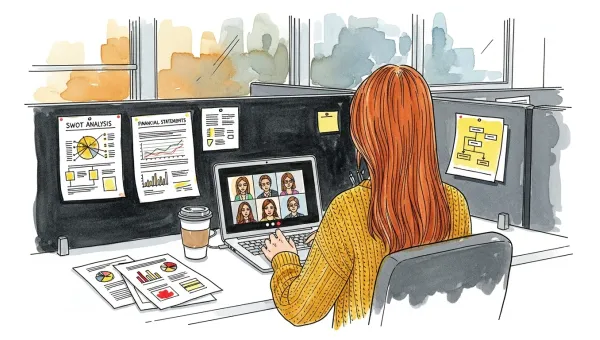
There is a ritual that happens every week in almost every organisation running complex projects. People gather in a conference room, on a Zoom call, on a Slack thread and they answer a question: how are things going?
The project manager summarises. Traffic lights get assigned. Slides are updated. Decisions are deferred to next week’s meeting. Everyone leaves with a shared picture of reality and that picture starts going stale the moment the call ends.
This ritual is called the project status update. And it is one of the most expensive things most organisations do.
Not because it takes time, though it does, a lot of it. According to a Wrike survey cited by Forbes, 45% of project managers spend more than one day per week manually compiling and reporting status updates. Not because it slows teams down, though it does that too. But because the project status update creates the illusion of project visibility while systematically destroying it.
The status update says: we know what is happening. The project says: you knew what was happening, on the day you asked.
The Hidden Cost of Manual Project Status Reporting
Most project managers work hard. The research confirms this. PMI’s Pulse of the Profession 2025: the largest annual global survey of the project management profession found that only 35% of projects worldwide finish successfully, meeting all goals and timelines. Among digital transformation projects specifically, McKinsey puts failure rates at 70%. Not because project managers are incompetent. Because the information systems they rely on are structurally broken.
Here is the structural problem. Project status updates are a pull mechanism. Someone asks. Someone answers. The answer reflects the answerer’s current understanding of their work, filtered through what they think the asker wants to know, shaped by whatever happened to be on their mind when they last checked. That information gets aggregated into a slide and becomes the “official” picture of project health.
Then reality keeps moving. A vendor delivers late. An engineer hits a dependency no one mapped. A stakeholder in a parallel workstream changes scope. None of this appears in the status deck until next week’s pull, if it appears at all.
This is what researchers call the project visibility gap: the lag between when problems emerge and when project leaders become aware of them. By the time a risk surfaces in a weekly status meeting, it may already have derailed the timeline. A single status meeting with eight participants consumes eight person-hours of collective time, yet the information shared is often outdated within days.
That is not a project coordination system. It is coordination theatre.
Why More Project Status Meetings Don’t Fix the Problem
Teams without centralised, real-time project visibility spend 10–20 hours weekly on coordination overhead, project status meetings, email chains, hunting for information, version reconciliation. Centralised tooling reduces that to 2–5 hours. The delta is not a rounding error. It is a week’s worth of productive work, every month, per person.
Research compiled across the project management industry is consistent: 40% of a typical project manager’s week is consumed by activities that generate no direct project value, the coordination overhead needed to keep everyone’s picture of reality aligned with actual reality.
Think about what is being purchased with those hours. Not execution. Not decisions. Not risk mitigation. The purchase is shared uncertainty, a temporary, collective agreement on a version of the truth that will start diverging from actual truth within 24 hours.
The project management community has understood this problem for years and mostly responded by adding more meetings. More check-ins, more standups, more syncs. PMI data shows that 29% of projects fail due to poor communication and collaboration, so the instinct is: communicate more. More touchpoints, more project status updates, more alignment sessions.
But this misses the cause. The problem is not the volume of communication. It is the structure of it. Every additional project status meeting adds overhead without changing the underlying architecture: a pull-based system that requires human effort to move information from where reality lives to where decisions are made.
More project status meetings do not close the visibility gap. They paper over it, weekly.
What Project Managers Are Actually Being Asked to Do
PMI’s Pulse of the Profession 2025 identified something sharper than the standard debate about tools and methodologies. Its central finding was that only 18% of project managers demonstrate high business acumen, the ability to navigate the organisational context around projects, connect project decisions to strategy, and act as a genuine partner to the business rather than an administrator of plans.
High-acumen project managers achieve measurably better outcomes: 27% lower failure rates and 5 percentage points better goal achievement compared to their peers. They are not just tracking RAG statuses. They are reading the business environment, surfacing project risks before they become incidents, and translating project reality into language that moves decisions.
That is what organisations say they want from project managers: strategic partners, not status reporters.
But here is the contradiction. The same organisations asking for strategic project management partners are burying those partners under 40% administrative overhead. The project manager who could be thinking about risk and strategy is instead chasing updates, reconciling trackers, and building project status slides that will be outdated before the next meeting.
The system is asking for one thing and making the other impossible.
Where Real-Time Project Visibility Actually Lives
The frustrating irony is that good project information does flow in most teams. It just flows in the wrong direction, at the wrong time, through the wrong channels.
Every standup, every client call, every design review, every engineering sync is packed with the actual state of the project: what has changed, what is blocked, what is at risk, what was decided. This is the signal that project managers need. It exists. It is being produced continuously by the work itself.
The problem is that none of it automatically reaches the places where it would be useful. The decisions made in Tuesday’s engineering sync do not update Wednesday’s project status deck. The scope change agreed on a client call does not resurface in Thursday’s resource conversation. The risk flagged in a team chat does not appear in the next executive review unless someone remembers to put it there before the week ends.
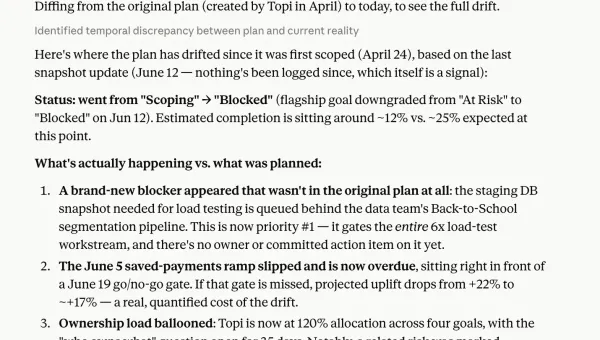
The project’s actual state lives in its meetings. The project’s official state lives in a document that was last updated whenever someone had time. These two things drift apart continuously, and the cost of that drift is borne entirely by the project manager, the person who spends their week manually reconciling them.
This is the Coordination Tax: the hidden overhead that project teams pay to maintain a working picture of their own reality. It is not a technology problem. It is an architecture problem. The architecture assumes that information must be manually moved from where it is generated to where it is needed, and it puts that manual work on the person who can least afford to spend time on it.
What Changes When Project Plans Are Kept Alive
The solution is not more project management tools. Most teams already have too many tools, which is part of the problem, each holds a fragment of the project’s reality, and none of them talk to each other in real time.
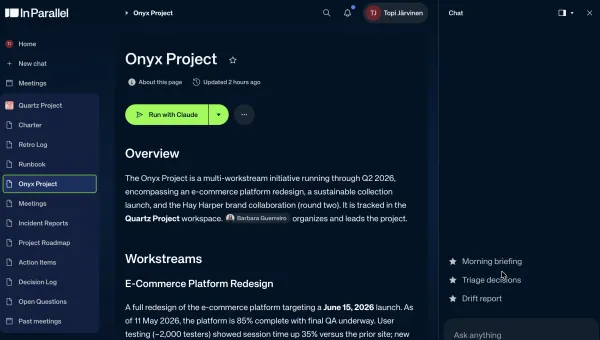
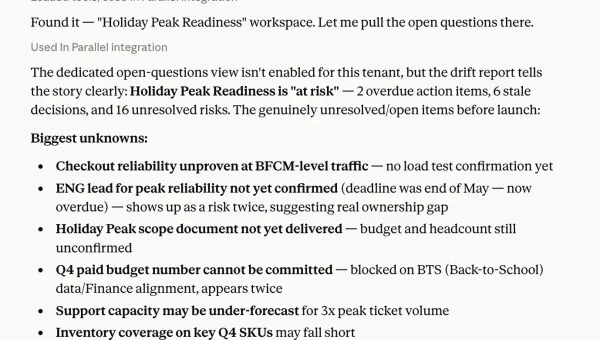
The solution is a different architecture: one where decisions and changes that happen in meetings automatically update the project’s shared picture of reality, rather than waiting for someone to manually reconcile them.
This requires treating the meeting itself, the conversation where the actual state of the project is discussed as a source of record, not just a consumption event. It requires the project plan to behave as a living document that changes when the project changes, not a static artefact that someone updates on Friday afternoon.
When that architecture exists, the project status update becomes redundant. Not because no one cares about project visibility, but because visibility is continuously available without anyone having to ask for it. The project manager stops spending 40% of their week synthesising information and starts spending it on the judgment calls that actually require a human: reading risk, managing stakeholders, connecting project decisions to business strategy.
That is the job organisations say they want project managers to do. It is also the job project managers actually want to do.
The project status update is not going to disappear because people stop caring about visibility. It is going to disappear because better architectures will make it unnecessary. The question for project managers is not whether to resist that shift, but whether to get ahead of it before the 40% overhead becomes the reason someone asks whether the role still needs to exist at all.
The plan needs to know what happened in today’s meeting. Right now, it almost never does.
Key takeaways for project managers
- 45% of PMs spend more than a day per week on manual project status reporting (Wrike/Forbes)
- 40% of the average PM’s week goes to coordination overhead that generates no direct project value
- Only 18% of project managers demonstrate high business acumen, yet those who do achieve 27% lower project failure rates (PMI Pulse 2025)
- 29% of projects fail due to poor communication but more meetings are not the fix
- Real project visibility comes from architecture, not effort: the project plan needs to update itself when reality changes
See how In Parallel turns your meetings into a living project plan →
Related reading
Get insights like this in your inbox
One email per week on execution intelligence, team coordination, and enterprise AI. No fluff.
By subscribing you agree to our Privacy Policy. Unsubscribe anytime.