The Role of Digital Twins in Modern Strategy Execution
How digital twins enhance strategy execution by creating real-time, adaptive models that keep businesses aligned and responsive in a changing world.

Digital twins are transforming strategy execution by providing real-time, interactive models that help businesses stay aligned and adaptable. By simulating execution before implementation, companies can reduce misalignment, optimize resources, and react faster to market changes. In Parallel’s Parallel Twin ensures that strategy and execution move together, bridging the execution gap.
How Digital Twins Bring Strategy to Life
In a world where business agility is no longer optional, organizations must find ways to bridge the gap between strategic vision and real-world execution. It’s no good unveiling a shiny new strategy, if execution falls flat. One of the biggest challenges is that this execution is complex. It is filled with moving parts and uncertainties that make it difficult to anticipate how everything will unfold.
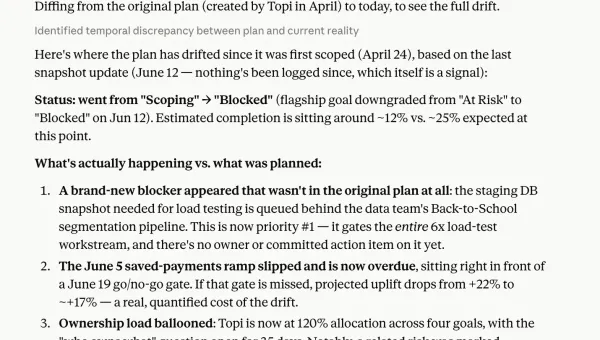
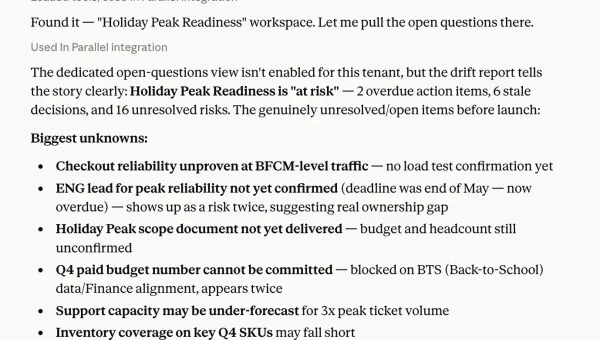
For instance, many companies struggle to anticipate how operational challenges will impact execution, leading to delays, misalignment, and wasted resources. This is where situational awareness becomes critical - leaders need the ability to detect risk before it leads to failure, ensuring strategies remain viable as conditions change.
To bridge this execution gap, businesses need new tools that allow them to predict challenges, test solutions, and iterate before committing. This is where digital twins come in – a technology that has revolutionized industries from manufacturing to urban planning and is now poised to make waves in strategy execution, helping organizations visualize, test, and refine their approach before acting.
Much like how engineers use digital twins to model and stress-test infrastructure before breaking ground, businesses can now apply the same principles to strategy execution. Rather than relying on static plans, they can create a living, dynamic model of their organization – one that evolves and responds in real time, ensuring execution stays aligned with strategic intent.
At In Parallel, we call this innovation the Parallel Twin – an advanced digital twin concept that enables businesses to execute strategy with precision, speed, and adaptability.
What is a digital twin?
A digital twin is a virtual representation of a physical object, system, or process that mirrors real-world conditions in real time. Originally developed for industries like aerospace and automotive engineering, digital twins allow organizations to simulate, analyze, and optimize outcomes before making real-world decisions.
When applied to business strategy execution, digital twins evolve beyond their traditional role. Instead of simulating machinery or infrastructure, they create a replica of an organization’s decision-making DNA - a living, breathing virtual environment where teams can navigate strategic scenarios, test outcomes, and adapt in real-time.
We’ve taken the concept of digital twins further with our Parallel Twin. This approach provides a virtual model of an organization’s operating environment, decision-making frameworks, and strategic initiatives, offering leaders real-time visibility into both internal execution and external market dynamics. By continuously monitoring shifts in competitive landscapes, regulatory changes, and broader industry trends, the Parallel Twin ensures businesses can adapt their strategies in response to external forces as well as internal priorities. This, in turn, enables organizations to enable businesses to move beyond static plans and execute Adaptive Strategies.
Traditional strategic planning tools often exist in silos and rely on outdated information, but the Parallel Twin integrates real-time data to provide a continuously updated view of an organization’s performance. It can simulate multiple scenarios, allowing businesses to test strategies before committing to a course of action. Beyond optimizing execution, it also helps leaders prioritize their next steps - ensuring focus is placed on the most impactful decisions rather than reacting to noise. This ultimately enhances decision-making agility, giving leaders and teams the tools to adapt and align on execution in real-time.
Why does it matter?
A staggering 90% of corporate strategies never reach full execution (Harvard Business Review). Brands like Blockbuster, Kodak, and Nokia have shown the consequences. Their corporate planning could not respond to the changing marketplace around them, leading to missed opportunities and eventual decline. Ultimately, they fell victim to the gap between their strategy and their need to execute, or what we call the strategy-market gap.
This often happens due to a lack of real-time insights at the leadership level, outdated execution methods, or misalignment across teams. Digital twins can eliminate these barriers by offering an interactive model where teams can experiment, test, and refine their execution in real-time against changing market conditions.
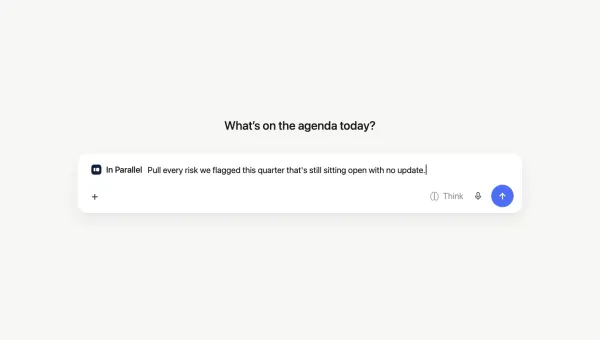
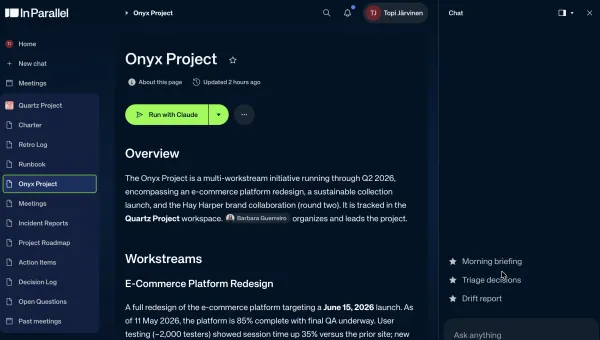
One of the biggest challenges in strategy execution is ensuring that every level of an organization – from leadership to individual contributors – remains aligned. The Parallel Twin achieves this by creating a unified dashboard where all stakeholders have visibility into strategic goals, progress, and the impact of their decisions.
Consider a global retail chain undergoing a digital transformation. Leadership sets an ambitious strategy to modernize operations, but execution is fragmented – store managers lack visibility, supply chain teams struggle with real-time data, and corporate leaders can’t track progress effectively. By implementing a Parallel Twin, the company creates a real-time digital replica of its strategy execution operations. This enables teams to align, test changes, and adapt quickly. With improved insights into in-store footfall, fluctuations in demand, and more, the strategy becomes a dynamic, actionable reality rather than just a vision.
Without real-time monitoring and iterative adjustments, organizations could waste millions in misaligned resources, lost opportunities, and failed initiatives. Digital twins play a role in preventing this by ensuring that strategy execution is tracked, measured, and optimized continuously, reducing inefficiencies and maximizing impact. Just as importantly, they help leaders prioritize where to take action - ensuring teams focus their resources on the most critical initiatives rather than spreading efforts too thin.
The future of digital twins in strategy execution
As technologies such as AI and machine learning continue to advance, digital twins will become an essential component of business strategy execution. The ability to test strategies in a virtual environment before deploying them in the real world will separate high-performing organizations from those struggling to keep pace.
At In Parallel, we believe that strategy execution should be everyone’s job – not just an abstract exercise for leadership. With our Intelligent Operating Model and Parallel Twin technology, we empower organizations to make strategy execution seamless, data-driven, and adaptable.
The days of strategy as a static plan are over. Digital twins, and specifically the Parallel Twin, offer a new era of dynamic execution, where businesses can anticipate changes, align their teams, and continuously optimize for success.
If your organization is serious about bridging the execution gap, embracing digital twin technology isn’t just an option - it’s a necessity.
Want to learn how digital twins can revolutionize your organization’s strategy execution? Let’s talk.
Get insights like this in your inbox
One email per week on execution intelligence, team coordination, and enterprise AI. No fluff.
By subscribing you agree to our Privacy Policy. Unsubscribe anytime.