A Plan That Flags Its Own Drift
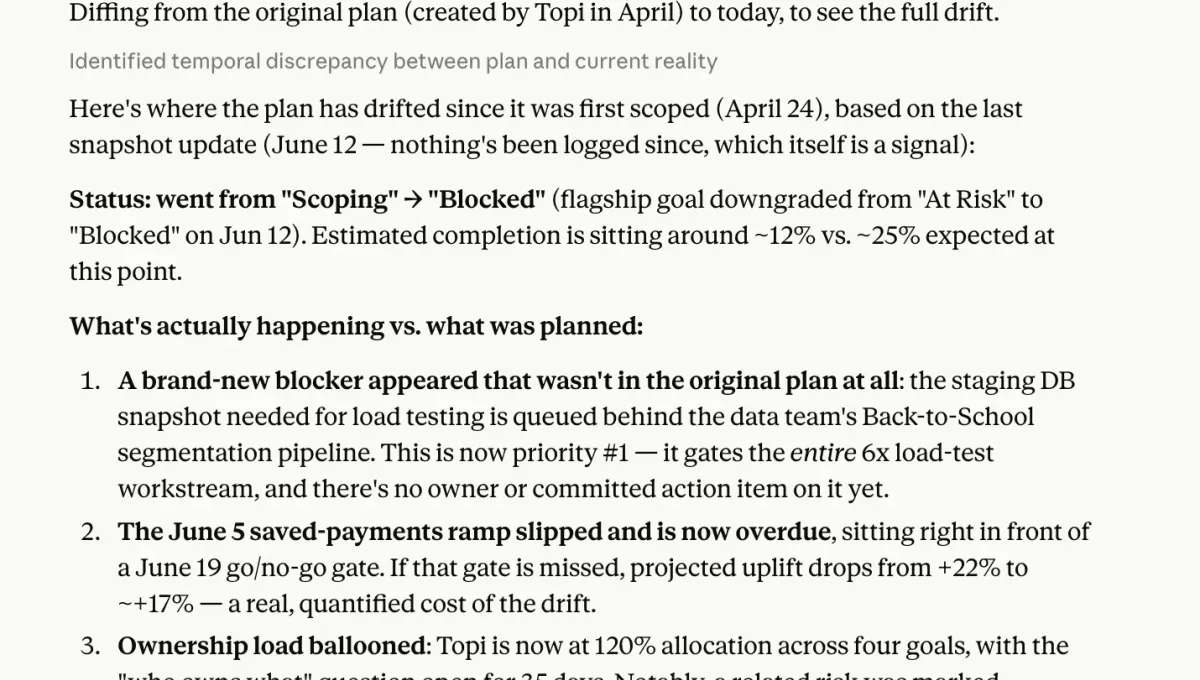
A plan that flags its own drift
🗺️ Execution plan— “Where has the plan drifted from what we’re actually doing?”
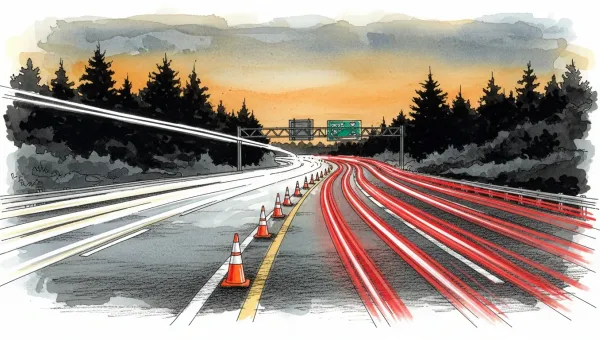
Most strategic plans don’t fail at creation. They fail in the eight weeks after the offsite, when the document quietly stops matching what the company is actually doing. By the next quarterly review, half the leadership team is operating from the plan as written, and the other half from a reality nobody has written down. The plan didn’t get cancelled. It just drifted, and nobody was watching the gap.
Drift is the natural state of a plan. The moment you write one down, reality starts moving and the document doesn’t. A dependency shifts. A deadline moves. A decision in a Wednesday call quietly contradicts a commitment the plan still lists as live. None of these are failures of execution. They’re the ordinary friction of a company doing real work in a world that won’t hold still. The failure is only that the plan and the work come apart, and the gap stays invisible until something expensive makes it visible.
Why nobody catches drift in time
The honest reason drift goes uncaught is that catching it is somebody’s unpaid job. Keeping a plan current means continuously comparing the document against reality — re-reading what you committed to, checking it against what’s actually happened, finding the contradictions, updating the artefact. This is the upkeep of artefacts, and it is pure coordination tax. It shows up everywhere except the P&L.
So it doesn’t get done. Not because anyone is lazy, but because the work is invisible, thankless, and always less urgent than the thing on fire today. The plan drifts a little each week, the reconciliation keeps getting deferred, and the gap compounds quietly until the quarterly review — at which point the leadership team spends the first hour just rebuilding a shared picture of where things actually stand. They are two meetings behind reality.
The plan-as-document assumes someone will keep it current by hand. Nobody does. That assumption is the whole problem.
The move: the plan compares itself against reality
Invert the assumption. Instead of a document that waits for a human to reconcile it, the execution plan is held as a living record that can be compared against what the company is actually doing — and report the difference.
This depends on the rest of shared context. Because decisions, commitments, and meetings are captured as structured records (the earlier pieces in this series), the plan isn’t floating free of reality — it sits on top of a stream of what’s actually happening. The comparison is mechanical, not magical. The plan lists a commitment; the records show it was quietly dropped in a call last week; the gap between the two is drift, and it can be surfaced rather than discovered.
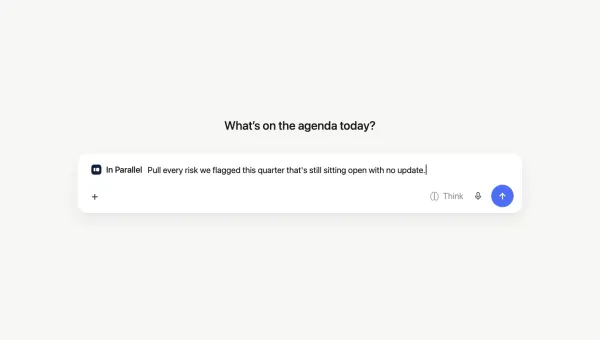
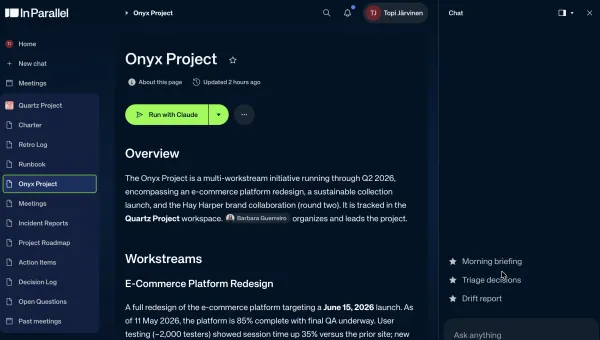
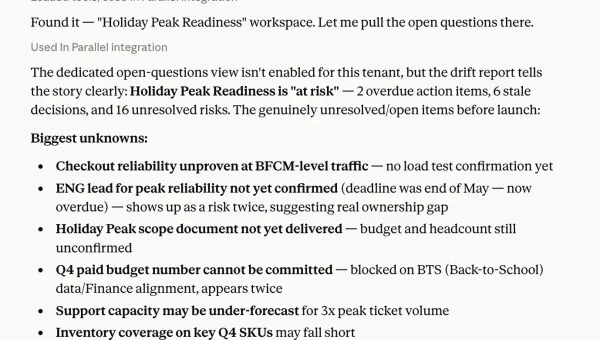
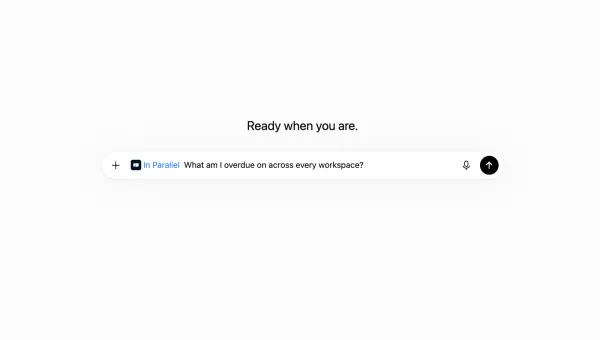
A drift report. You can ask where the plan and reality have come apart, and get the specific gaps back: commitments the plan still lists that the work has moved past, deadlines that shifted without the document catching up, decisions that contradict what the plan assumes. “Where has the plan drifted from what we’re actually doing?” returns a list of contradictions, not a feeling that something’s off.
A versioned history. The plan keeps its versions, so you can see how it changed and when. A plan that only shows its current state hides its own evolution. One that holds its history lets you ask what changed since the last review — and answer it from the record.
A diff between versions. You can compare two states of the plan directly and see exactly what moved. This is the difference between “the plan feels different now” and “these four things changed, here they are.” Diffing a plan is as ordinary as diffing code, and for the same reason: you cannot manage a change you cannot see.
Put together, these turn the plan from a document that silently decays into a record that reports its own decay. The upkeep doesn’t vanish — but the part that was pure tax, the manual hunt for contradictions, is done by the comparison instead of by a person at 21:00 before the board meeting.
What this doesn’t do
It isn’t autopilot. The plan flags where it has drifted; it doesn’t decide what to do about it. A surfaced contradiction still needs a human to choose: update the plan to match reality, or hold the line and pull reality back to the plan. That judgement is the actual work of leading, and it stays exactly where it belongs.
Nor is it a claim that drift is always bad. Sometimes the plan drifting from reality means reality learned something the plan didn’t know — the drift is the company being smart, and the right response is to update the plan. The gap gets surfaced without moralising about it. A drift report is a prompt to look, not a verdict that someone failed.
And it is not a substitute for a real plan. A living execution plan keeps a good plan current. It cannot rescue a plan that was vague or wrong to begin with — it will faithfully track the drift of a bad plan into reality, which is not the same as helping. Garbage, kept beautifully up to date, is still garbage.
The honest limit
What this removes is the upkeep tax: the unpaid, invisible, perpetually-deferred work of reconciling a plan with reality by hand, and the quarterly ritual of rebuilding a shared picture from scratch because nobody did. That tax is large and it is real, and getting it back is most of the point.
What it leaves is the hard part, undiminished. Deciding what the plan should be. Choosing, when reality and the plan disagree, which one is right. Holding a direction through the noise. Shared context can keep the plan honest about where it stands. It cannot tell you where to go. That was always your job, and it still is — now with the gap in plain sight instead of hidden until the review.
The fifth of six pieces on what a shared record holds, after The Questions Nobody Wrote Down.
Get insights like this in your inbox
One email per week on execution intelligence, team coordination, and enterprise AI. No fluff.
By subscribing you agree to our Privacy Policy. Unsubscribe anytime.