How To Keep Up With Changing Plans
Your Meeting Just Changed the Plan. Nobody Told the Plan.
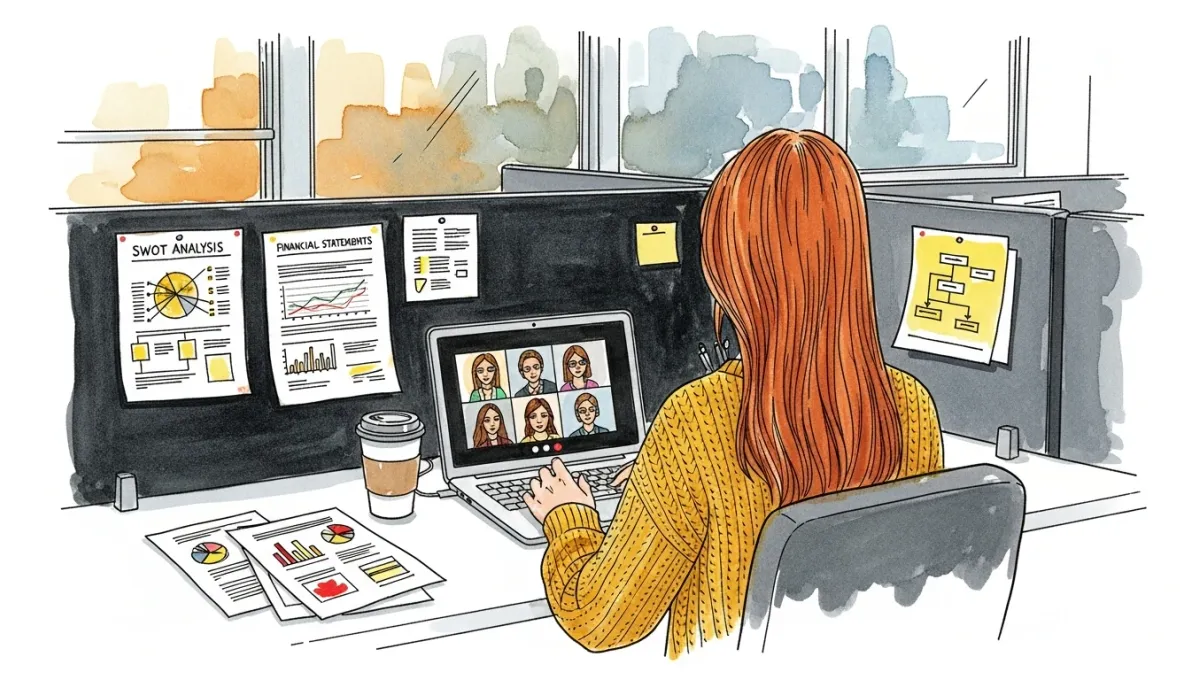
It’s Monday morning. You open your laptop, pull up the roadmap, and it looks fine. Organised. Dated last Friday. You head into your first meeting.
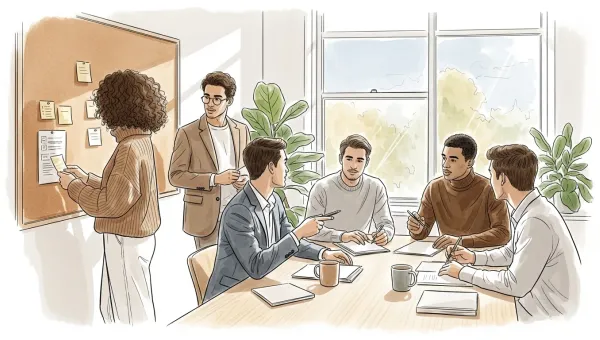
By noon, three things have changed. The product launch moved two weeks. A dependency surfaced that nobody had tracked. A commitment was made to a customer that nobody wrote down. The real plan, the living, breathing version of what your team is actually doing now lives scattered across the memories of everyone who was in those rooms.
The plan in the tool still says what it said on Friday.
This isn’t a failure mode. This is just Tuesday. It happens in every meeting, on every team, in every company that runs on projects and people. And it’s probably the most expensive thing nobody’s measuring.
The Hidden Cost of the Gap
Here’s a number worth sitting with. The average manager spends 30–40% of their working week on coordination overhead, status updates, meeting follow-ups, plan maintenance, chasing context they already had yesterday. At a fully loaded cost of €65–100 per hour, that’s €27,000–50,000 per manager per year. Not in salaries. Not in software licences. In the pure cost of keeping people and systems on the same page.
For a company with 20 managers, that number quietly exceeds half a million euros a year. It never shows up on a P&L. It shows up as slowness instead, decisions that take three weeks when they should take three days, projects that drift off plan gradually and then suddenly, teams who are genuinely working hard but still feel like they’re pushing water uphill.
McKinsey has found that executives spend roughly 40% of their time making decisions in meetings, and that 60% of them say that time is poorly used. Not because the decisions are wrong. Because the decisions don’t go anywhere after the call ends.
The meeting finishes. The system doesn’t know what happened. The gap opens a little wider.
Why AI Note-Takers Are Not Enough
The first wave of AI in meetings was genuinely helpful. Record the conversation, transcribe it, summarise it, send it around. Faster notes, cleaner follow-ups, fewer things falling through the cracks.
But a summary is a record of what was said. A plan is a model of what should happen next, who owns what, what’s at risk, how everything connects. These are different things. The first is a snapshot. The second needs to be alive.
If a decision made in Tuesday’s steering committee changes a dependency that Team C is relying on for their sprint, a well-formatted AI summary doesn’t help Team C. It helps the person writing the status report. Meanwhile, the team is still working from last week’s version of reality.
There’s also a trap worth naming. AI tools that make individual contributors faster can, without meaning to, make the organisation harder to steer. More output without better alignment just means more threads for everyone else to track. You get velocity without direction. The Coordination Tax compounds, and the note-taker, however smart, doesn’t touch it.
The Insight Most Tools Miss
Here’s the thing almost nobody has built around: a meeting isn’t an interruption to work. A meeting is where execution reality actually changes.
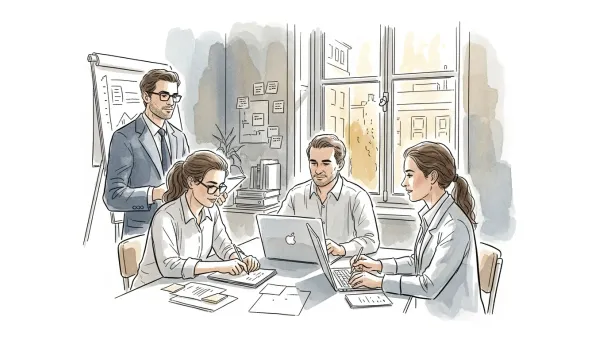
Decisions get made in conversation. Priorities shift in the room. Blockers surface, timelines slip, commitments get created, all before anyone has opened Jira, touched Asana, or updated a single field in Notion. By the time the meeting ends, what’s true about the plan has already changed. Everything after is just catching the documentation up.
Current tools are systems of record. They sit and wait to be updated. They know where you told them you were, not where you actually are.
Think of a GPS that needs you to manually type in your coordinates every few minutes. That’s what project management looks like today. The tool is only as current as the last time someone remembered to update it, and the last update almost certainly happened before the meeting where everything changed.
Better documentation isn’t the answer. Infrastructure that listens at the source is.
What a Living Plan Actually Does
The phrase “Living Execution Plan” can sound abstract. In practice, it’s pretty concrete.
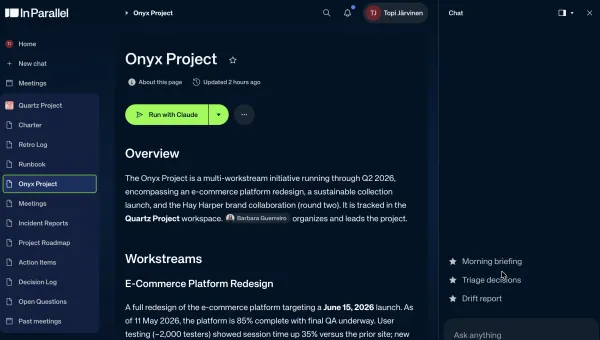
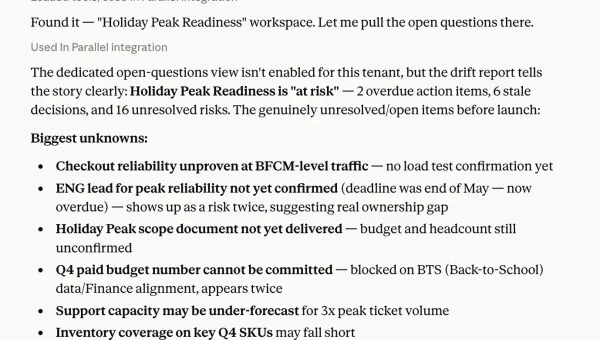
When a decision lands in a meeting, “let’s push the launch two weeks,” “Alex owns the API spec by Friday,” “we need to flag this as a risk at the next board update”. A Living Plan picks it up, understands what it means downstream, and pushes the changes to every connected system. The Jira ticket updates. The Slack message goes out. The milestone that depended on that deadline adjusts. The person who needed to know finds out automatically, not at the next all-hands.
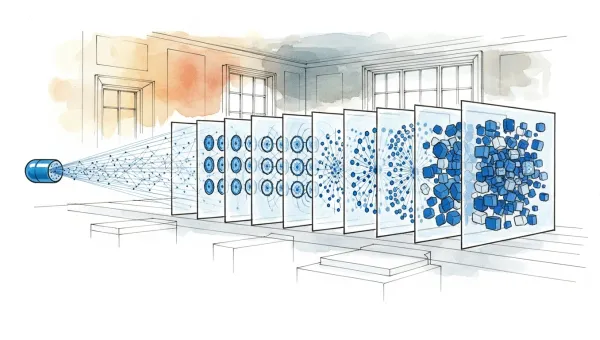
The mechanism behind this has six steps. It listens to where decisions happen. It extracts the structured information, the commitment, the owner, the deadline, the risk. It maintains state, keeping a continuously current picture of what the team is actually working towards. It propagates changes across the tools where work lives. It detects drift when what the team is doing and what the plan says start to diverge. And it recalculates downstream dependencies when reality shifts.
None of these ideas are new. What’s changed is that AI makes it possible to run all of them continuously, in the background, at the speed of conversation, without asking anyone to manually translate meeting decisions into tool updates.
That’s the difference between a faster note-taker and a coordination layer. One captures what happened. The other keeps everything honest.
The Three-Phase Journey
Getting from “we take meeting notes” to “our plans update themselves” happens in stages, which is a good thing. It maps naturally to how teams build trust in new infrastructure. Read more about it here.
Phase one is Capture. An AI note-taker joins your meetings, pulls out decisions and action items, and distributes clean summaries. It’s immediately useful and asks nothing of anyone. It also starts building something quietly in the background: a record of how execution actually happens on your team. Most teams have a clear memory of the first time they caught something important that would previously have slipped, a commitment made offhandedly, a blocker that got mentioned but never escalated. That moment tends to stick.
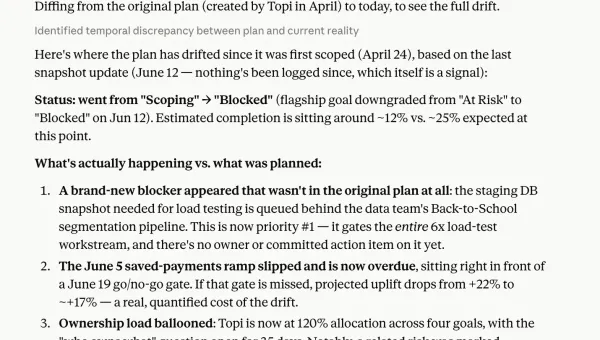
Phase two is Coordination. Meeting outcomes stop living in email threads and start flowing into plans. The tools your teams already use, Jira, Asana, Notion, Linear stay current without anyone manually touching them. Drift gets flagged before it becomes a real problem. Status updates write themselves from actual data rather than from whoever happened to check in most recently.
Phase three is Intelligence. Patterns start to surface. You can see which decisions consistently drift from what gets implemented. Where coordination overhead is highest. Which teams make commitments they struggle to keep. This isn’t just operational visibility, it’s a genuine memory layer for how your organisation executes over time.
You can’t coordinate what you haven’t captured. You can’t get intelligence without coordination data. Each phase earns the next one.
The Question Worth Asking This Week
There’s a meeting on your calendar in the next few days where something will change. A priority will shift. A deadline will move. A decision will get made that three other people needed to hear about.
That’s not a prediction. That’s just how work works.
The question is whether your plan will know about it. Right now, for most teams, it won’t. The decision will live in someone’s memory, in a message thread, in a summary that may or may not get read by the right people. The plan will stay where it is. The gap will widen a little more.
The fix isn’t a better note-taker. It isn’t another status meeting or a more disciplined team or a stricter process for updating Jira.
It’s infrastructure that treats every meeting as the execution event it actually is, and makes sure the plan always reflects what’s genuinely true.
In Parallel is the AI note-taker that updates your plans, automatically, after every meeting. Start for free →
Get insights like this in your inbox
One email per week on execution intelligence, team coordination, and enterprise AI. No fluff.
By subscribing you agree to our Privacy Policy. Unsubscribe anytime.