Program Visibility Is Breaking: The Meeting Paradox Behind Execution Drift

Introduction
Most organizations try to improve execution by increasing alignment.
More meetings. More updates. More coordination.
But despite this effort, many teams still struggle with program visibility.
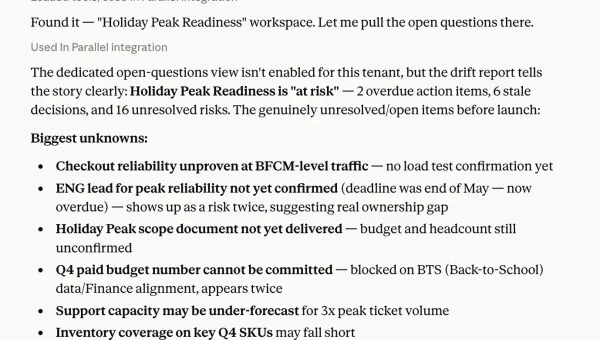
Leaders can’t clearly see:
- what changed this week
- where risks are emerging
- how work is progressing across teams
Instead of clarity, they get fragmentation.
This is the paradox: the more organizations try to stay aligned, the harder it becomes to maintain a clear view of execution.
Why Program Visibility Breaks in Modern Organizations
In cross-functional environments, work rarely happens in one place.
Execution is distributed across:
- teams
- tools
- meetings
- conversations
To manage this complexity, organizations rely heavily on coordination.
Meetings become the primary way to:
- align priorities
- resolve dependencies
- make decisions
But while coordination increases, program visibility often decreases.
Why?
Because decisions are made in conversations, but not consistently reflected in execution systems.
The Meeting Paradox: More Alignment, Less Clarity
Meetings are essential for cross-functional alignment.
They help teams stay connected and move work forward.
But as organizations scale, meeting volume increases.
And with it, a new problem emerges:
- more meetings → more decisions
- more decisions → more information
- more information → harder to track
Over time, this creates a disconnect between:
- what teams discuss
- what systems show
This is where execution drift begins.
When Coordination Becomes a Bottleneck
In many organizations, coordination becomes the dominant activity.
Teams spend significant time:
- preparing updates
- attending meetings
- following up on decisions
- maintaining reporting structures
But despite all this effort, alignment still feels fragile.
This is because coordination happens across multiple channels:
- meetings
- emails
- chat
- project tools
Without a shared system connecting these inputs, visibility breaks down.
This is often experienced as:
- unclear priorities
- duplicated work
- delayed decisions
- constant need for status updates
Why PMO Reporting Doesn’t Fix the Problem
To improve visibility, organizations often rely on reporting.
PMO structures introduce:
- dashboards
- status reports
- regular updates
But these systems depend on manual input.
And manual input is always delayed.
By the time reports are created:
- decisions have already changed
- priorities have shifted
- risks have evolved
This is why many teams feel that status reporting doesn’t reflect reality.
It captures what was true, not what is true now.
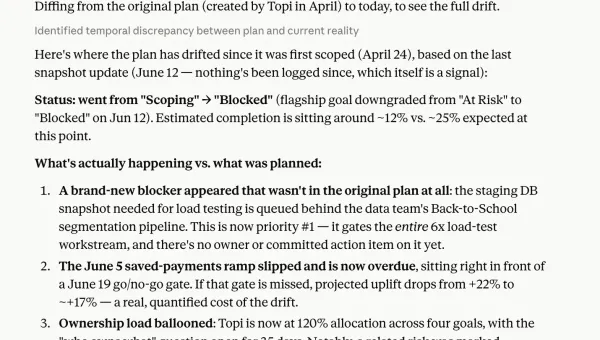
Execution Drift Starts Between Meetings
Execution drift doesn’t happen because teams are disconnected.
It happens because information doesn’t flow between coordination and execution systems.
Small gaps accumulate:
- a decision made but not recorded
- a dependency discussed but not tracked
- a risk identified but not visible
Each gap is minor.
But together, they create a growing disconnect between plans and reality.
Over time, teams are no longer executing against a shared understanding.
What Good Program Visibility Looks Like
Improving program visibility is not about adding more coordination.
It’s about reducing the gap between:
- what teams decide
- what systems reflect
In practice, this means:
- decisions don’t get lost after meetings
- plans update as work evolves
- risks remain visible across teams
- leaders can see what changed without asking
When this happens, coordination becomes lighter, not heavier.
From Coordination to Continuous Visibility
The key shift is to treat meetings as execution events.
Every meeting changes something:
- timelines
- priorities
- ownership
- dependencies
Instead of manually updating systems after the fact, organizations need a way to:
- capture decisions as they happen
- reflect changes immediately
- maintain a shared execution view
This creates continuous program visibility, rather than periodic reporting.
How In Parallel Enables Real-Time Program Visibility
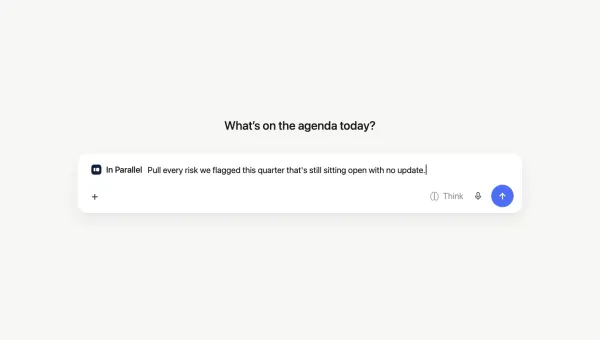
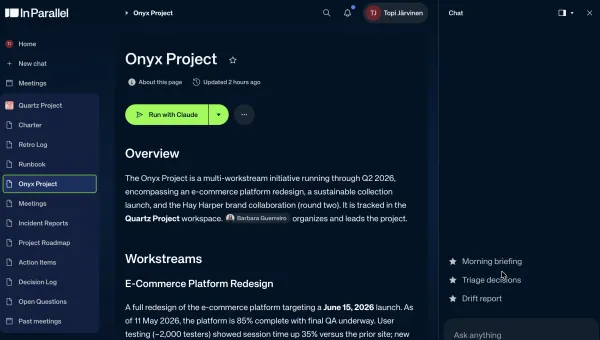
At In Parallel Oy, this problem is addressed through an Intelligent Management System (IMS).
IMS connects meetings directly to execution systems.
Instead of relying on manual updates:
- decisions are captured automatically
- plans stay current after every meeting
- teams share one clear view of execution
This approach removes the coordination gap between:
- conversations
- decisions
- execution
And replaces it with a system where visibility is continuously maintained.
Closing the Gap Between Alignment and Execution
Organizations don’t lose visibility because they lack communication.
They lose visibility because communication doesn’t translate into execution systems.
As long as decisions remain fragmented across meetings and tools:
- coordination overhead will increase
- reporting will fall behind
- execution drift will continue
But when coordination and execution are connected:
- plans stay aligned with reality
- teams operate from a shared understanding
- leaders regain control over execution
Final Thought
The goal is not more alignment.
It’s better visibility across execution.
Because when teams can clearly see what’s happening, coordination becomes easier, and execution moves faster.
See How Program Visibility Works in Practice
If your team is spending time coordinating but still lacks a clear view of execution, the issue isn’t effort, it’s how information flows.
In a short demo, you’ll see:
- how plans update after meetings
- how decisions stay visible across teams
- how execution stays aligned without extra reporting
20-minute demo. No prep needed.
Book a demo Explore how it works on the homepage
Get insights like this in your inbox
One email per week on execution intelligence, team coordination, and enterprise AI. No fluff.
By subscribing you agree to our Privacy Policy. Unsubscribe anytime.