Perfect Meeting Memory: What Becomes Possible When AI Remembers Your 1:1s
The conversations already happened. The software should remember them.
Perfect meeting memory
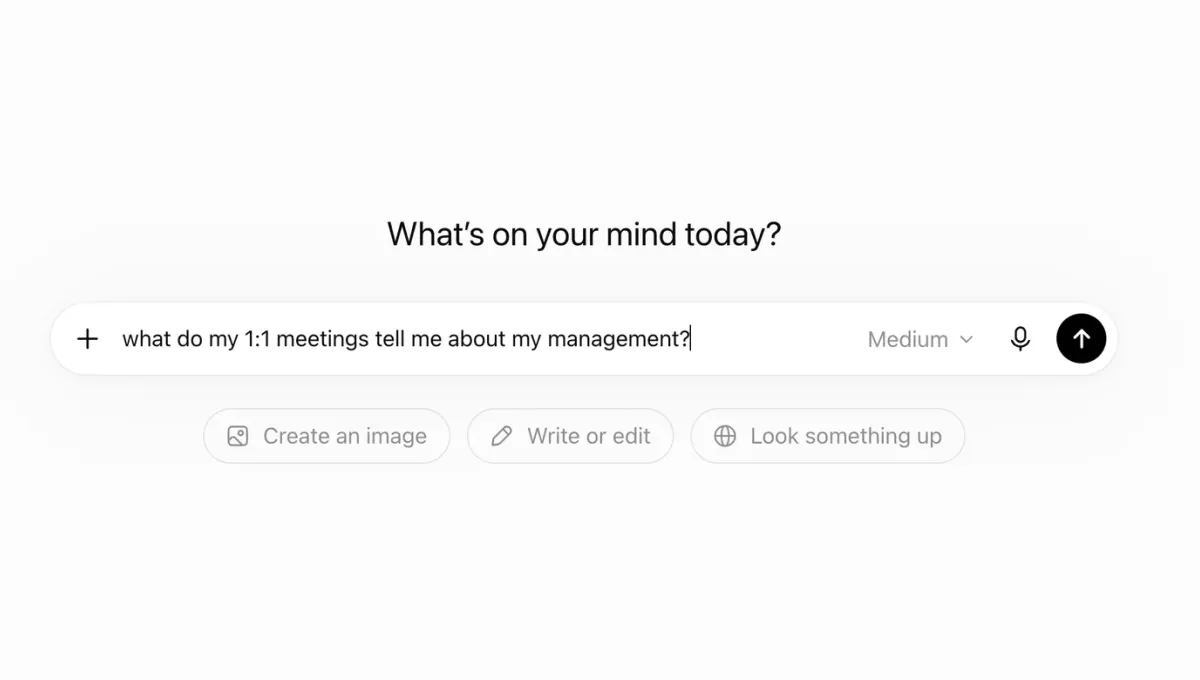
💬 Meetings— “What do my 1:1 meetings tell me about my management?”
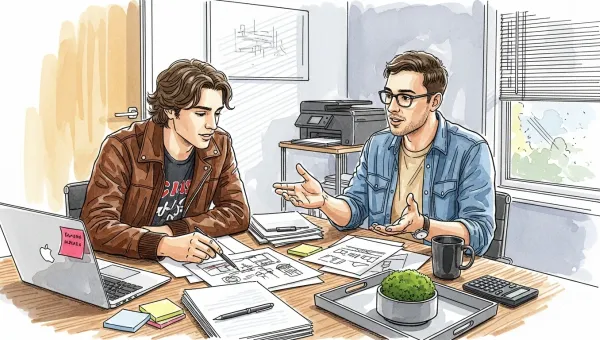
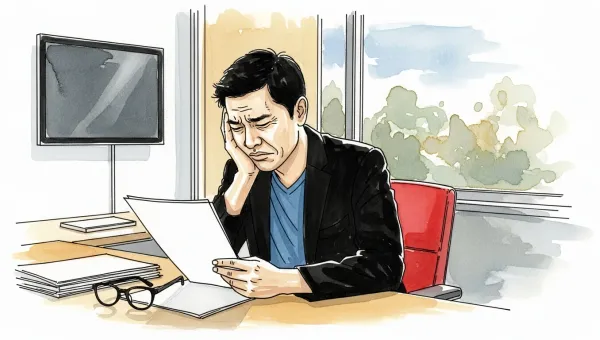
A manager finishes her week with eleven one-to-ones behind her. Somewhere in those eleven conversations are three pieces of feedback she should act on: a quiet flag from a report who is close to leaving, a suggestion she half-agreed to, a concern she promised to look into. By Friday at 17:00 she could name maybe one of them. Not because she wasn’t paying attention. Because attention is not storage, and eleven conversations is more than memory was built to hold.
This is the most ordinary failure in management, and the most expensive. The information existed. Someone said it, out loud, to the person who needed to hear it. And then it evaporated — because the only place it lived was a human head that had ten other conversations stacked on top of it by Thursday.
Professionals spend an average of 146 hours a year trying to remember what was said in prior meetings. That’s nearly four full work weeks — not doing work, but reconstructing it.
The notes don’t save you
The usual answer is: take better notes. Most managers have tried. The trouble is that notes solve the wrong half of the problem.
Notes capture what you decided, in the moment, was worth capturing. But the value of a 1:1 is often the thing you didn’t flag — the offhand remark that only looks important three weeks later, when a second person says something similar. You cannot take notes on significance you haven’t recognised yet. By the time the pattern is visible, the raw material is gone.
And notes don’t compose. Eleven separate note documents, written in eleven different moods, do not answer the question “what feedback have I gotten this month?” They answer “what did I think to write down, eleven times, under time pressure?” Those are not the same question, and the gap between them is where good managers lose track of their own people.
Capture everything, structure it, make it answerable
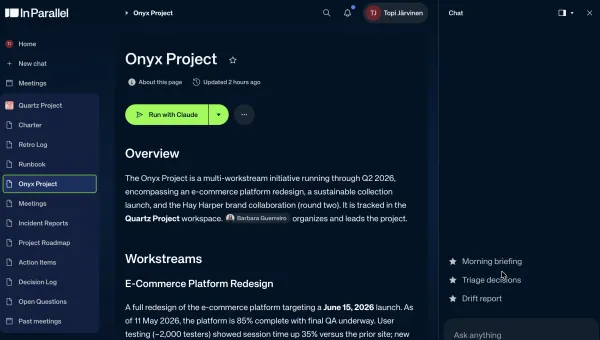
The capability is simpler to describe than the habit it replaces. Every meeting is captured — the transcript, the attendees, the time, the platform it happened on. Not the highlights someone chose. The whole conversation, held as a record.
That record is the raw material. On its own, a pile of transcripts is just a bigger haystack. What makes it useful is structure: each meeting record carries who was there, when it happened, and which part of the org it belongs to. So the question “my 1:1s, this month” is not a search through your memory of which calls were one-to-ones. It is a filter the substrate can resolve, because it holds the attendee list and the date on every record.
Three things follow from that.
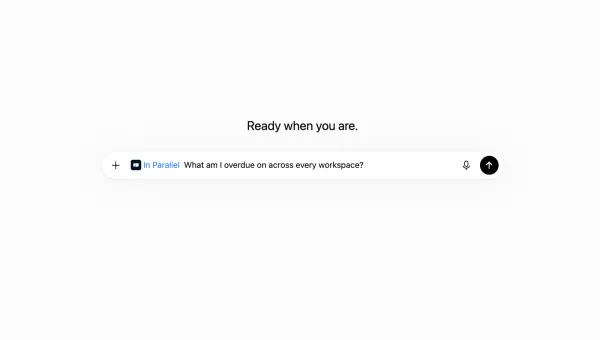
You can ask across meetings, not just within one. “What feedback have I gotten in my 1:1s this month?” is a query that reaches into eleven conversations at once and pulls the thread you asked for. The answer is assembled from what was actually said, not from what you remembered to note.
You can ask later, when significance has surfaced. Because the whole conversation is held, not just the highlights, the offhand remark from three weeks ago is still there to be found when the second remark makes it matter. You are no longer limited to the importance you recognised in the moment.
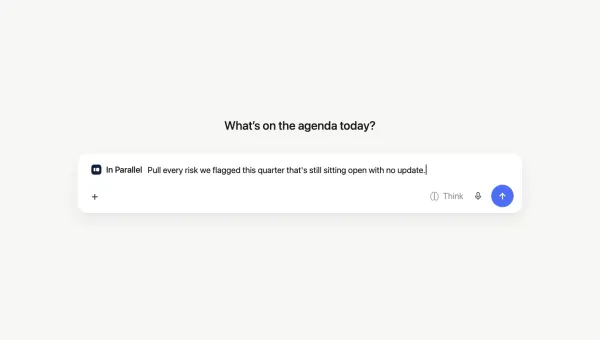
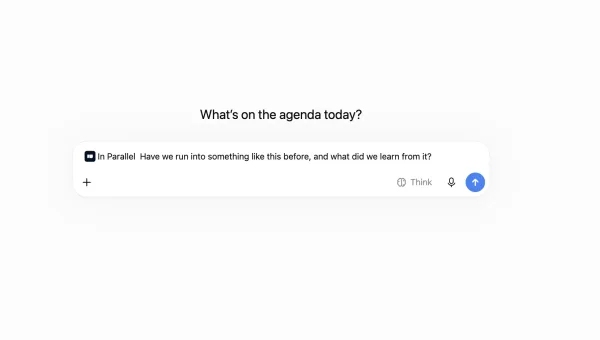
You can ask in plain words. The query is a sentence, not a saved view with six filters. “What did we agree I’d follow up on after my last 1:1 with Sun?” reaches one meeting. “Which of my reports raised workload concerns this quarter?” reaches across many. The shape of the question changes; the act of asking does not.
The offhand remark from three weeks ago is still there to be found when the second remark makes it matter. You are no longer limited to the importance you recognised in the moment.
What this is not
It is not a recording you have to re-watch. The point of holding the full transcript is so that you never have to scrub through it — the substrate reads it for you when you ask. A meeting memory you have to replay at 1x is just a longer meeting.
It is not a substitute for being present. Capture lowers the cost of forgetting; it does not lower the cost of not listening. A manager who checks out of the conversation because “it’s all recorded anyway” has made the meeting worse, not better.
And we will not pretend the capture is perfect. Transcription mishears names. A speaker who mumbles a commitment leaves a soft record of it. For anything that carries weight — a promise, a number, a decision — the record is a strong first draft, not a sworn transcript.
The honest limit
There is a real tension here. It deserves to be named, not smoothed over. A system that remembers every meeting is a system that remembers every meeting. That is the whole value and the whole risk in one sentence.
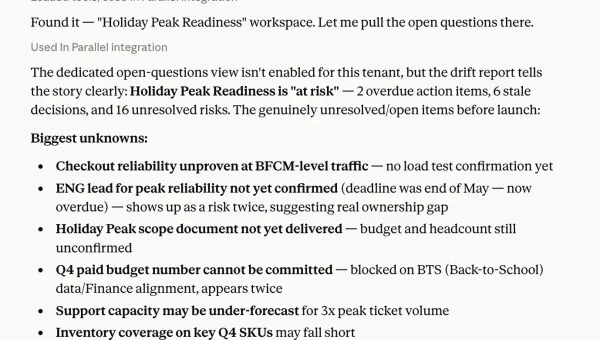
The same capture that lets a manager keep faith with eleven reports has to be governed — who can ask, of which meetings, about whom. We treat that as a permissions problem with a real answer, not a detail to wave away. A memory worth having is a memory worth fencing.
What the capability removes is narrow and worth removing: the tax of reconstruction. The hour on Sunday spent trying to recall what your team told you. The feedback that died because it was given on a Tuesday and needed on a Thursday. The quiet, recurring failure of good people losing track of good information.
The conversations already happened. The least the software can do is remember them.
Frequently asked questions
What is AI meeting memory? AI meeting memory captures full meeting transcripts as structured records and lets you query them in plain language — across all your meetings, not just the last one. Instead of asking “what happened in that call?”, you ask “what feedback have I gotten in my 1:1s this month?” and get an answer assembled from the full history.
How is this different from AI meeting notes? AI meeting notes summarise individual meetings. AI meeting memory lets you query across all of them — spanning people, topics, and time — and get answers that no single summary could give you.
Who benefits most? Managers running regular 1:1s, team leads coordinating across workstreams, and executives who need to stay across many conversations without rebuilding context from scratch each week.
Is it safe to record every meeting? Yes, with the right access controls. At In Parallel, access is permission-scoped by role, EU-hosted, and GDPR-compliant. The memory is only as trustworthy as the fence around it.
Get insights like this in your inbox
One email per week on execution intelligence, team coordination, and enterprise AI. No fluff.
By subscribing you agree to our Privacy Policy. Unsubscribe anytime.