Program Visibility: What It Is, Why It Breaks, and How to Actually Fix It

What Is Program Visibility?
Program management visibility is the ability to see, in real time, what’s actually happening across your program, decisions made, commitments given, risks surfaced, progress against plan. Not what someone reported last Thursday. Not what the slide deck said at the last steering committee. What’s true right now.
Done well, program visibility means every stakeholder, from the team lead running a sprint to the VP signing off on the roadmap, is working from the same current picture of reality. Blockers are visible before they become crises. Drift from the plan gets caught early. Decisions land where they need to.
Done poorly, or not done at all, program visibility collapses into a cycle of status meetings, manual reporting, and the creeping sense that nobody quite knows where things actually stand.
Why Lack of Program Visibility Is So Expensive
The numbers are striking. According to Wellingtone’s State of Project Management report, around 55% of organisations don’t have access to real-time project KPIs, and 43% of project managers spend one or more days every month manually pulling together status reports. That’s not a productivity problem. That’s a visibility problem masquerading as a productivity problem.
The downstream cost of that gap is well-documented. PMI’s research consistently finds that organisations with poor program management visibility waste significantly more money than those with strong execution oversight, in some measures, up to 21 times more. Across a billion euros of project investment, poor visibility costs an average of €129 million in wasted spend.
For a program manager running three or four concurrent workstreams, the cost is harder to quantify but just as real: the hours spent assembling reports from five different tools, the decisions delayed because the right people didn’t have the right information, the escalations that could have been avoided if a risk had surfaced two weeks earlier.
Lack of program visibility doesn’t feel like a crisis in the moment. It feels like Tuesday.
Where Program Visibility Actually Breaks Down
The instinct when visibility is poor is to add more reporting. Another dashboard. A weekly written update. A standing sync to “align on status.” These interventions are well-intentioned, and they sometimes help. But they rarely fix the underlying problem, because the problem isn’t that people aren’t reporting enough. It’s that the information that matters most never makes it into the system in the first place.
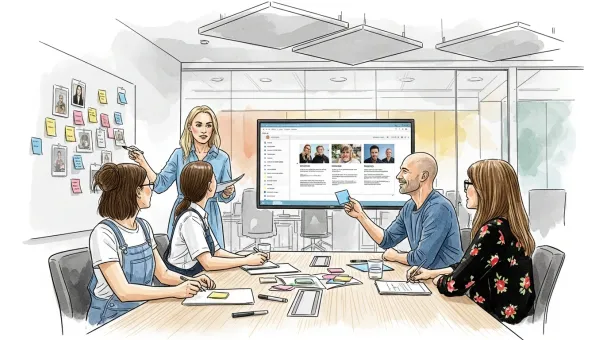
Here’s what actually happens. A program manager runs a cross-functional meeting. Decisions get made: a dependency shifts, a timeline slips, a commitment is made to a customer. The meeting ends. Someone writes rough notes. Half the action items make it into Jira. The decisions themselves, the ones that change what the program actually looks like, exist only in the memories of the people who were in the room.
By the time the weekly status report goes out, it reflects the plan as it existed before those decisions. The report is accurate to the tool, not to reality. And everyone downstream, stakeholders, adjacent teams, executives, is making decisions based on a picture that’s already out of date.
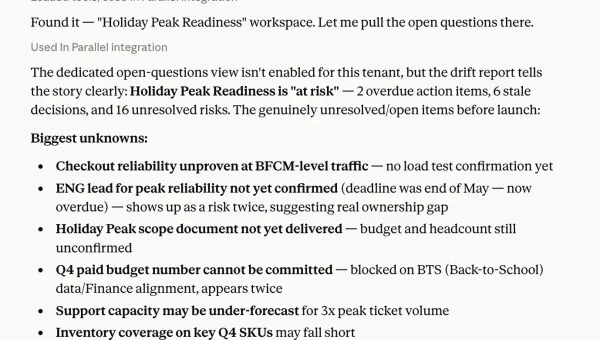
This is the root cause of poor program management visibility, and it repeats itself across every program, in every meeting, every week. It’s not a human failure. It’s a systems failure. Decisions happen in conversation. The systems that track programs don’t listen to conversations.
How to Get Program Visibility: The Three Layers
Getting program visibility right means solving for three distinct things, in order. Most teams try to solve for the third without having built the first two, which is why the dashboard always feels slightly behind.
Layer 1: Capture what actually happens in meetings.
The most important information in any program lives in the conversations where decisions get made. Sprint reviews, steering committees, cross-functional syncs, 1:1s with key stakeholders, these are where priorities shift and commitments form. If those decisions don’t get captured structurally, not just in rough notes, but in a way that connects them to the plan, visibility is impossible no matter how good your tooling is.
An AI note-taker that joins meetings silently and extracts decisions, commitments, risks, and ownership assignments is the foundation layer. Not because summaries are the goal, but because you can’t coordinate what you haven’t captured. This is the starting point.
Layer 2: Let the plan update itself.
Once decisions are captured, they need to flow into the plan automatically. The Jira ticket should update when the timeline changes in a meeting. The risk register should reflect what was raised in the steering committee. The stakeholder report should be based on what’s actually happening, not on what someone remembers to type in.
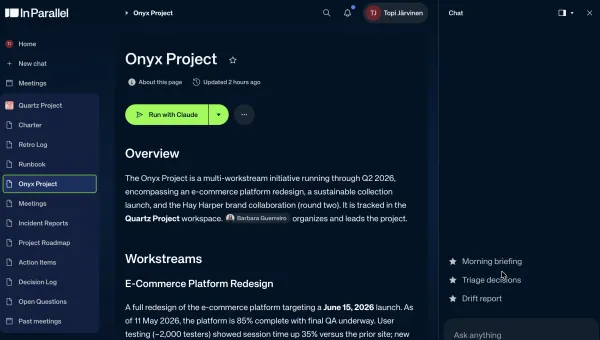
A living execution plan, one that updates continuously from meeting signals rather than waiting for manual input is what true program management visibility looks like in practice. The plan is no longer a snapshot from last Friday. It’s a continuously current model of what the program is actually doing.
Layer 3: Surface drift before it becomes a crisis.
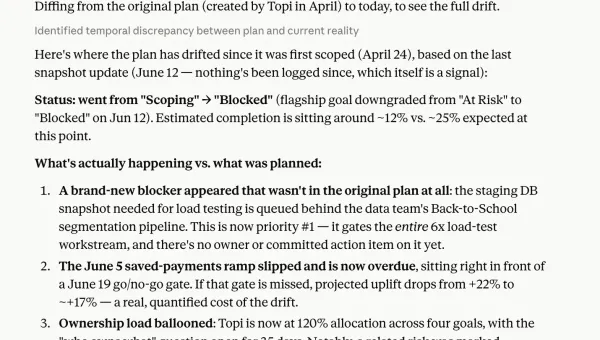
With capture and coordination in place, something more valuable becomes possible: proactive visibility. The system doesn’t just show you what’s true, it shows you where the plan and reality are starting to diverge, before the gap becomes a problem.
A commitment made three weeks ago that nobody has followed up on. A dependency that was updated in one tool but not another. A risk that was flagged in conversation but never formally logged. These are the signals that, caught early, save a program. Caught late, they become the subject of post-mortems.
The Visibility Trap to Avoid
There’s one pattern worth naming explicitly: solving for program visibility by adding more meetings.
It feels logical. If people don’t know what’s happening, bring them together more often. Daily standups. Weekly syncs. Monthly reviews. Quarterly deep-dives. Each one creates the appearance of visibility, everyone in the room, everyone aligned while actually compounding the problem. Every additional meeting is another event where decisions get made, commitments are given, and the plan quietly diverges a little further from reality.
HBR research has found that 71% of senior managers consider meetings unproductive and inefficient. McKinsey found that executives spend roughly 40% of their time in meetings making decisions, with more than half of that time considered poorly used. The problem isn’t that teams are meeting too little. It’s that meetings are where execution reality changes, and that change never finds its way back into the plan.
More meetings without better infrastructure to capture what happens in them doesn’t improve program visibility. It just creates more moments for the plan to fall further behind.
What Program Visibility Looks Like When It Works
When program visibility is working, a few things feel different.
The status report writes itself, because the plan already reflects this week’s decisions, not last week’s. Stakeholders stop asking “where do we stand?” because they can see for themselves. Blockers surface in the weekly brief rather than in a crisis conversation two weeks too late. The program manager spends their time on judgment calls and decisions, not on assembling information that should already exist somewhere.
This is the practical difference between a program team that’s constantly reactive and one that’s genuinely in control. It’s not about having better people or running more disciplined processes. It’s about having infrastructure that keeps the shared picture of reality current, automatically, after every meeting, without anyone needing to remember to do it.
Program visibility isn’t a reporting problem. It’s an infrastructure problem. And the fix is building the layer that connects where decisions happen, in conversations to where work gets tracked.
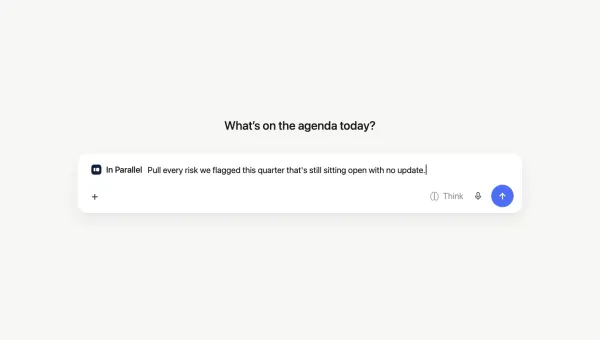
In Parallel is the AI note-taker that captures every decision in your meetings and updates your plan automatically. Book a demo →
Get insights like this in your inbox
One email per week on execution intelligence, team coordination, and enterprise AI. No fluff.
By subscribing you agree to our Privacy Policy. Unsubscribe anytime.