The Half-Life of a Decision

The Half-Life of a Decision
A decision is made in a meeting. Clear, specific, owned. Three people were in the room. They all understood it the same way.
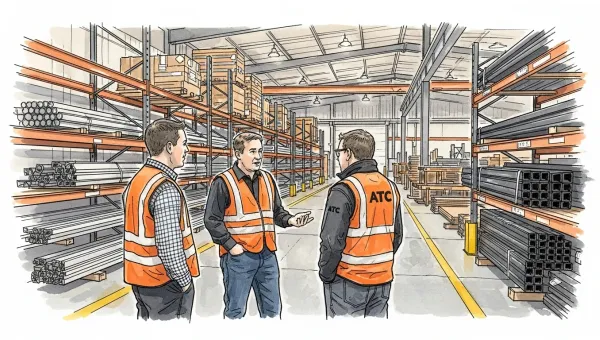
By the time it reaches the ten people who need to act on it, two communication steps later, it has transformed. The nuance is gone. The context that made it make sense has been stripped away. Some people heard a version that included the caveats. Some heard a version that didn’t. Two people are acting on interpretations that point in different directions.
McKinsey research shows that 80% of organisations struggle with decision-making — and the traditional RACI model often makes it worse. The problem isn’t that people can’t make decisions. It’s that decisions decay in transit.
What Decision Decay Actually Is
Every time a decision passes through a human being — gets summarised, paraphrased, forwarded, mentioned in passing — it loses something. The original context degrades. The specific reasoning gets compressed into a conclusion. The caveats and conditions get dropped because they’re hard to convey quickly.
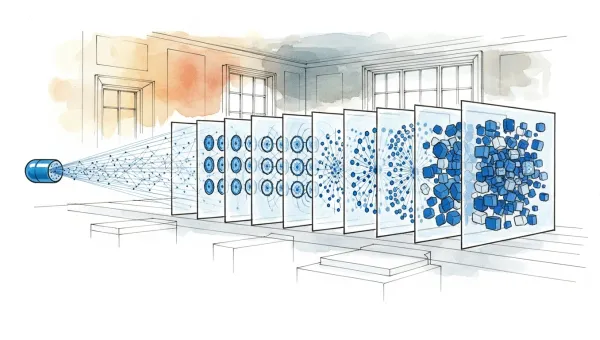
This is the half-life of a decision: the rate at which shared understanding of what was decided degrades as it travels through an organisation.
The half-life varies by organisation. In a ten-person startup where everyone is in the same room, it might be measured in days. In a 500-person company with five layers of management and decisions communicated through a chain of weekly syncs, it can be measured in hours. By the time the decision reaches the people who need to act on it, it may bear only a passing resemblance to what was actually decided.
McKinsey’s research supports this: even high-performing companies deliver around 30% less value than their strategies promise — and the primary culprit is not strategy quality but information fidelity. The decision degrades. The execution follows the degraded version. The strategy delivers the degraded result.
The Four Stages of Decay
Stage one: the decision is made. It’s specific, contextualised, and understood by everyone in the room. This is peak fidelity.
Stage two: the decision is summarised. Someone writes it up. The summary is accurate but compressed. Some context is already lost. This happens within hours.
Stage three: the decision is communicated. Someone reads the summary and passes it on — in a Slack message, in a conversation, in a mention during a standup. More context is dropped. The nuance is gone. What remains is the conclusion, stripped of the reasoning that made it right.
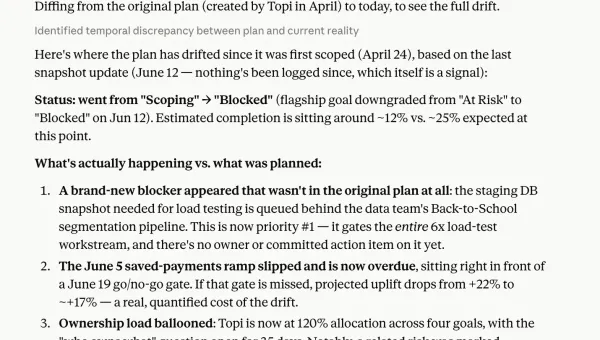
Stage four: the decision is acted upon. By this point, different people have heard different versions. Some have the context. Some don’t. Some are acting on what they think was decided, which may or may not match what was actually decided. Execution diverges.
The gap between what was decided and what gets executed is not, in most cases, a failure of competence or commitment. It’s a failure of fidelity. The decision decayed in transit.
Why Shorter Distance Is the Fix
The conventional response to decision decay is better communication. Clearer summaries. More explicit documentation. Town halls where leaders re-explain the decision to everyone who needs to act on it.
These interventions help at the margins. They don’t solve the structural problem.
The structural problem is distance. Every step between the decision and the system where work happens is a step where meaning can be lost. The solution isn’t better compression at each step — it’s fewer steps.
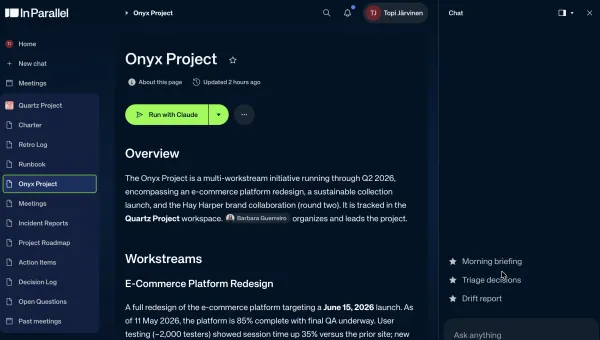
When a decision made in a meeting flows directly into the plan — captured structurally, in context, connected to the work it affects — the distance between decision and action collapses. The person who needs to act doesn’t receive a summarised version of a paraphrased version of what was decided. They receive the decision itself, with the context intact.
A Living Plan that updates from meetings doesn’t just keep the plan current. It maintains decision fidelity. What was decided is what gets acted upon. The decay stops at the source.
The Leadership Implication
Decision decay has a specific implication for leaders that’s worth naming directly.
The decisions you think you’ve made may not be the decisions your organisation is acting on. The gap between intent and action is not, in most cases, a motivation problem. It’s a fidelity problem. The decision travelled through too many steps, lost too much context, and arrived somewhere different from where you sent it.
The fix isn’t louder communication. It’s shorter distance — infrastructure that carries the decision from the meeting where it was made to the systems where it needs to land, without the lossy compression of human relay chains.
That’s not a management philosophy. It’s an engineering problem. And it has an engineering solution.
In Parallel captures decisions at the source and propagates them directly to your execution systems — no decay in transit. See how it works →
Related reading
Get insights like this in your inbox
One email per week on execution intelligence, team coordination, and enterprise AI. No fluff.
By subscribing you agree to our Privacy Policy. Unsubscribe anytime.