Leadership Insights
Episode notes
The conversation, captured
- Date
- November 3, 2026
- Participants
- Kristian Luoma Vasco Duarte
The Coordination Tax is a podcast by In Parallel about what actually breaks down when teams stop sharing the same reality. In this episode, host Kristian Luoma sits down with Vasco Duarte — host of the Scrum Master Toolbox podcast, where he has published more than 4,000 daily episodes over 11 years, author of NoEstimates, and a veteran of Nokia and F-Secure who has been using Scrum since 2004. The Agile Manifesto turned 25 this year, and the conversation starts there: what agile was for before the certifications and scaled frameworks arrived. Vasco's answer is one idea — shorten the time it takes to learn — and the rest of the episode follows that idea through estimates, a 500-person program at Nokia that ran six months past its plan before it was cancelled, Lean Startup, and what changes when AI brings the cost of writing code close to zero.
Summary
- Agile is one idea: reduce the feedback loop. If it takes a day to get feedback, get it down to hours. If it takes hours, get it down to minutes.
- Processes help when you need to scale a way of working. The trouble starts when people get so caught up in the process that they forget why agile was there in the first place.
- Software still sucks, but a lot less than it did when it was waterfall-driven. Agile's lasting contribution was treating software as its own industry with its own needs.
- SAFe was brilliantly named for managers who fear change in process-oriented companies. Vasco calls it completely unsafe: it lengthens feedback cycles and raises the coordination tax.
- Estimation was a security blanket carried over from waterfall. In the data, the throughput of user stories predicted progress far better than any estimate.
- Estimates got worse the more people wanted them to be right. Ask how long something takes when a trade show is three weeks away, and it takes three weeks.
- Counting stories over three to five sprints, whatever their size, predicts long-term progress through a backlog better than sizing them.
- Estimates are wishful thinking because they are about the future. Throughput is a lens to the past that you then forecast forward, and it changes the conversation with a manager from "can't you work a bit faster?" to "here's the data."
- You cannot ask 100 teams whether they will make it. The data you collected yesterday is out of date today, and teams that estimate all day have no time left for the work.
- Measure throughput one layer up — features delivered per week across the whole program — and you get near-real-time observability for free, as long as the teams are actually shipping.
- At Nokia the data said a 12-month program was at least six months late. The program manager emailed every team to ask if they would be on time. They all said yes. It was cancelled 18 months in, tens of millions of euros later.
- Teams don't say yes because they want to lie. They don't know either.
- The only thing that counts is what is done and doesn't need touching again: customer-ready features live in production or a production-like system, not pull requests submitted.
- Lean Startup gave agile the business strategy it never had. The software is the medium, like wood for a carpenter — the carpenter sells furniture, not wood.
- With AI the cost of coding has dropped so close to zero that code has no value on its own. The bottleneck moves to customer-facing experiments, and AI does not speed those up.
- Selling is the bottleneck. In a startup today, anyone who isn't talking to customers or partners every day isn't useful to it.
- Big companies keep a real advantage in relationships, legal frameworks, and contracts. But without a fast learning cycle they leave a flank open for a small company to drive a wedge through.
- You can't change a big company. Christensen's innovator's dilemma already explains why: run a lot of experiments and cannibalize your own business, or watch the high-value work migrate to other players.
- The one question: if it takes you two weeks to ship, ask how you could ship tomorrow. Keep asking until you are shipping every day — then the bottleneck is the market, and that is where to focus.
What was discussed
Was the Agile Manifesto the right paper to write?
Key insight- Vasco judges it the agile way — by results rather than by who was in the room or what they wrote.
- Agile is now the standard. Many people in software have never seen another way of working.
A simpler definition of agile — reducing the feedback loop
Highlight- Agile means reducing the time it takes to learn, whether the question is technical or commercial.
- An agile mindset shortens feedback loops even inside a compliance framework. Compliance is not what separates agile from waterfall.
- Process is a useful tool for scaling, until people forget the reason it exists.
Why SAFe is "completely unsafe"
Key insight- It answered a real demand for structure and order from process-oriented organizations.
- It began as an attempt to scale agile without increasing the coordination tax, and ended up increasing both the tax and the feedback cycle.
The NoEstimates book — how it started
Story- Teams moving from waterfall to Scrum in the early 2000s kept estimation as a security blanket.
- Vasco started collecting project data in 2008 and found throughput a better predictor than estimates.
- His first conference talk on it in 2012 set off a decade-long argument online.
Why counting stories beats sizing them
Key insight- The number of stories completed over three to five sprints predicts backlog progress better than story sizes do.
- He let teams and product managers keep estimating, and simply made decisions on throughput instead.
Estimates are wishful thinking. Throughput is a lens to the past.
Highlight- An estimate carries a factor of what we would like the future to be.
- Showing a manager data produces a different decision than showing them an estimate, which invites pizza, weekends, and a hackathon.
Real-time observability and the 500-person program
Key insight- With 500 people in 100 teams across time zones, converging individual estimates into a program forecast is impossible.
- Checking once a quarter was the best most large companies could do.
- Feature throughput per week at the program level gives near-real-time observability at no extra cost.
The program manager who emailed every team "will you be on time?"
Story- The throughput data showed a 12-month Nokia program running at least six months late.
- Every team answered that it would be on time, and no scope was cut.
- The program was cancelled 18 months in, after several tens of millions of euros.
Why organizations lie to themselves about results
Key insight- Most people don't especially want to be right. They want to do the job and go home, and that is fine.
- Someone at the top still has to stop and look at the actual results, however good the strategy looks.
The only thing that counts is what's shipped
Highlight- Count what is done and never needs touching again.
- Measure customer-ready features in a production-like system rather than activity such as pull requests, calls, or emails.
Lean Startup — the business strategy agile was missing
Key insight- The agile movement was made up of developers, and nobody had put a coherent business strategy on top of it.
- Lean Startup's point is that you are building a business, not software.
- Build-measure-learn is the agile cycle seen from the business side.
AI moves the bottleneck from technical to customer-facing
Highlight- Teams can now build 20 solutions to the same problem in parallel and test them with real customers.
- Talking to people and understanding their business still has to be done by humans.
- Large companies are protected by relationships and contracts, and exposed wherever they learn slowly.
You can't change a big company — Christensen's innovator's dilemma
Key insight- Nobody saw Google, Amazon, Facebook, or OpenAI and Anthropic coming until they arrived.
- The biggest bank may stay the biggest bank while the high-value business moves to other players.
- The only option is to run many experiments and cannibalize your own business.
The one question to keep asking — "how could we ship tomorrow?"
Highlight- If shipping takes two weeks, ask how it could happen tomorrow, and keep asking.
- Once you ship every day the constraint is the market. Learn to sell and learn how business models work.
Links
Vasco Duarte on LinkedIn: linkedin.com/in/duartevasco
Scrum Master Toolbox podcast: scrum-master-toolbox.org
NoEstimates on Amazon: amazon.com
In Parallel: in-parallel.com
The Coordination Tax Index 2026: download the report
Listen
Get new episodes in your inbox
One email per week on execution intelligence, team coordination, and enterprise AI. No fluff.
By subscribing you agree to our Privacy Policy. Unsubscribe anytime.
More episodes
Leadership Insights ·
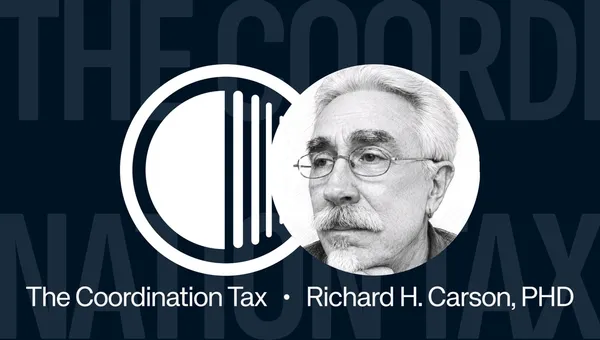
You Either Manage Change or It Manages You: Richard H. Carson on how change actually works
Richard H. Carson, PhD — 40 years inside county governments, regional planning agencies, nonprofits, and the state of Oregon — on why every organization has a risk manager but almost none has a change manager, and what that asymmetry costs.
Leadership Insights ·
You Can't Fix Culture With a Mission Statement: Adam Christing on humor as leadership
Adam Christing — professional master of ceremonies, founder of Clean Comedians, and author of The Laughter Factor — on why culture is a feeling rather than a statement, and why humor is the fastest way for a leader to shift it.

Leadership Insights ·
Urgency Isn't Leadership. It's Addiction: Jennifer Recla on the mindset breaking your team
Jennifer Recla — leadership coach who has worked with hundreds of leaders across nonprofits, mission-driven organizations, and large financial institutions — on the urgency mindset behind most organizational chaos, and why most leaders have no idea how much of it they're creating themselves.
Leadership Insights ·
HR Is the Last Line of Defense Against Chaos: Barry Wolfe on value-centric leadership
Barry Wolfe — HR consultant, founder of Argos HR, and author of It's All in Your Head — on why HR is the last line of defense against organizational chaos, why every role needs 3–5 clear value outcomes, and why the foundation of a well-run company is one document under 300 words.
Leadership Insights ·
You Can't Sword-Fight a Bullet: Alberto Torres on surviving disruption
Alberto Torres — former Nokia executive, ex-McKinsey partner, and author of The Z Curve — on what actually happened at Nokia, why great peace-time leaders quietly fail in war-time, and what every company facing AI right now should learn from the companies that got disruption right.
Leadership Insights ·
Your Leadership Doesn't Know What's Going On: Olivia Montgomery on why decisions belong lower in the org
Olivia Montgomery — principal analyst at Data Frame and former Gartner researcher — on why every layer up the org chart knows less about what's really going on, and why the fix isn't more visibility for leadership but pushing decisions down two or three levels.
Leadership Insights ·
You Don't Get to Be the Rock Star Anymore: Craig Denison on the founder's hardest transition
Craig Denison — head of growth at The Table Group (Patrick Lencioni's firm) and founder of Green Thumb Consulting — on the transition every founder hits when execution stops running through their brain, and why 99% of the time the founder is creating the dysfunction they are trying to fix.
Leadership Insights ·
You Don't Have a Training Problem: Dr. Christie Vanorsdale on the L&D order-taker trap
Dr. Christie Vanorsdale — founder of Vanorsdale Learning Lab, cognitive multimedia learning researcher, and fractional Chief Learning Officer — on why L&D keeps solving the wrong problems, and what changes when you stop treating it as an order taker.
Leadership Insights ·
AI Is Quietly Eating Your Week: Kristian Luoma on the Coordination Tax Index 2026
A solo episode on the first quantitative measure of coordination overhead. 247 managers, five countries, 16.5 hours a week — and why the heaviest AI users are carrying the most load, not the least.

Leadership Insights ·
What Really Happened to the Spotify Model: Hosanna Ouellette and Nora Bereczkei on autonomy, agents, and the 26 rocket ships
Hosanna Ouellette and Nora Bereczkei ran the operating model rebuild inside Spotify. They explain why autonomy stopped scaling, how they stopped shipping the org chart to users, and why agents break the purposeful ambiguity every operating model quietly relies on.